










What's Happening?
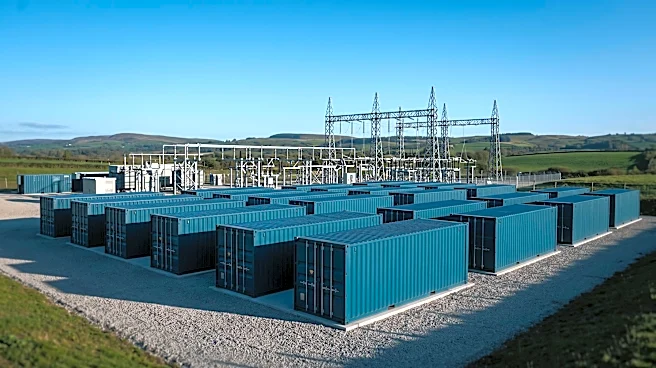
Residents and local officials in Kenosha County, Wisconsin, are expressing significant opposition to a proposed 200-megawatt standalone battery energy storage system (BESS) in the town of Wheatland. Robin Energy Storage, a subsidiary of Copenhagen Infrastructure
Partners, filed an application with state regulators for the project. Unlike the existing Paris Solar and Battery Park in Kenosha County, this proposed BESS would draw power directly from the grid during low-demand periods and discharge it during high-demand times, rather than being charged by a specific generation resource. Kenosha County Executive Samantha Kerkman stated that the county has established zoning requirements for battery storage systems and passed a moratorium in May, citing potential health and safety issues and technological changes. Wheatland Town Board Supervisor Kyle Madsen indicated that the town's planning commission voted against the proposal before the developer submitted its state application. The Public Service Commission (PSC) staff believes that standalone battery projects of 100 megawatts or more generally require state approval, similar to other large-scale energy facilities, though the final determination rests with the commission.
Why It's Important?
This situation highlights a growing tension between energy infrastructure development and local community concerns in the U.S. While proponents, like Robin Energy Storage spokesperson Scott McPherson, argue that standalone batteries enhance grid reliability by providing energy during peak demands, local residents and officials are raising concerns about safety, the loss of rural character, and regulatory authority. The county's experience with the existing Paris battery facility, which has reportedly had frequent maintenance alarms requiring first responder attention, fuels these anxieties. This debate underscores the challenges of integrating new energy technologies into existing communities, particularly when local governments feel their regulatory authority is being bypassed. The outcome of this proposal could set a precedent for how standalone battery storage projects are approved and regulated across Wisconsin and potentially other states, influencing the balance between state-level energy goals and local control.
What's Next?
The Wisconsin Public Service Commission (PSC) will review Robin Energy Storage's application for the 200-megawatt standalone battery energy storage system. The PSC will need to determine its authority to regulate such standalone BESS projects, as Kenosha County Executive Samantha Kerkman has questioned the state statute's clarity on this matter for standalone systems. The company, however, asserts that it filed its application after the PSC released new rules providing more clarity for state-level applications for standalone battery projects. Local opposition is expected to continue, with residents and officials likely to voice their concerns during the PSC's review process. The resolution of this case will clarify the regulatory framework for standalone battery storage facilities in Wisconsin and could influence future energy development projects and local government involvement in such decisions.
Beyond the Headlines
The controversy surrounding the Kenosha County battery proposal extends beyond immediate regulatory and safety concerns, touching upon broader societal shifts and the evolving energy landscape. The pushback from residents and local officials reflects a common challenge in the U.S.: the 'not in my backyard' (NIMBY) phenomenon, where communities support renewable energy in principle but resist its physical manifestation near their homes. This case also highlights the ethical dimension of technological advancement, as the perceived risks of new energy storage solutions, even if statistically low, can outweigh the perceived benefits for local populations. The debate over whether state or local authorities should have primary regulatory control over such projects underscores a fundamental tension in governance, particularly as energy infrastructure becomes more decentralized and integrated into local environments. The long-term implications could include a re-evaluation of siting laws for energy projects, potentially leading to more robust community engagement requirements or clearer delineations of regulatory power to facilitate the transition to a more reliable and sustainable energy grid.