








What's Happening?
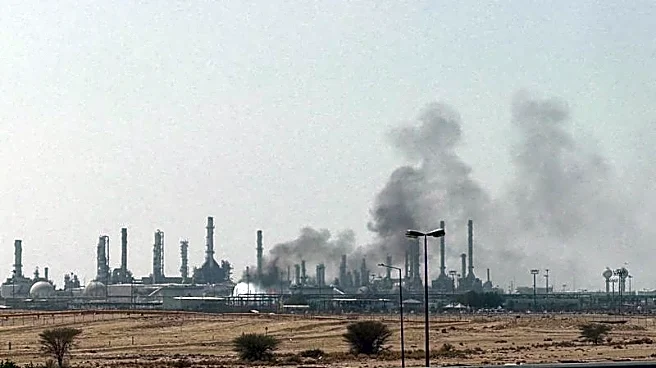
Participants in the fourth ASEAN “Khair Ummah” conference in Phnom Penh, Cambodia, have strongly condemned Houthi attacks targeting Muslim holy sites, including the launch of drones and missiles toward Mecca and Madinah, as well as civilian assets in Saudi
Arabia. The condemnation was articulated in the conference’s closing statement, as reported by the Saudi Press Agency (SPA). The conference, organized by Saudi Arabia’s Ministry of Islamic Affairs, Dawah and Guidance, brought together approximately 130 officials, scholars, researchers, and Islamic figures from Saudi Arabia and ASEAN member states. Attendees praised Saudi Arabia’s efforts to promote unity and solidarity through its organization and support of the conference. The event featured eight sessions that addressed various issues, including strengthening cooperation among scholars and Islamic institutions across ASEAN countries. Participants also emphasized the importance of moderation in addressing challenges and called upon scholars and preachers to promote correct creed, counter misconceptions, instill tolerance among young people, and effectively utilize modern technologies and artificial intelligence. They stressed the continuation of the conference as a platform for strengthening cooperation and serving Muslims and their causes, and extended gratitude to the Cambodian government for hosting the event.
Why It's Important?
The condemnation from the ASEAN conference underscores the international community's concern over the Houthi attacks, particularly those targeting sacred Islamic sites like Mecca and Madinah. These attacks are not only a direct threat to civilian lives and infrastructure in Saudi Arabia but also carry significant religious and cultural implications for Muslims worldwide. The targeting of such holy places is perceived as a profound provocation and a violation of religious sanctity, potentially escalating regional tensions and drawing broader international condemnation. The conference's emphasis on promoting unity, moderation, and countering misconceptions highlights a collective effort to address extremist narratives and foster interfaith harmony in the face of ongoing conflicts. The involvement of ASEAN member states signifies a broader regional concern about stability and security in the Middle East, recognizing the interconnectedness of global peace. The call for effective use of modern technologies and artificial intelligence by scholars and preachers suggests an evolving strategy to combat misinformation and promote positive values in the digital age. This collective stance from a diverse group of Islamic figures and officials reinforces the narrative that such attacks are unacceptable and detrimental to regional and global stability.
What's Next?
The strong condemnation from the ASEAN conference is likely to add to the international pressure on the Houthi movement to cease its attacks on Saudi Arabia. While the statement itself does not outline specific punitive measures, it signals a unified diplomatic front from a significant bloc of nations. This could lead to increased calls for UN intervention, more stringent sanctions, or enhanced security cooperation among affected nations. The emphasis on promoting moderation and countering misconceptions suggests a long-term strategy to address the ideological underpinnings of such conflicts, potentially through educational initiatives and interfaith dialogues. The continued operation of the ASEAN “Khair Ummah” conference as a platform for cooperation indicates ongoing efforts to foster regional solidarity and address common challenges within the Islamic world. The Saudi government, having organized the conference, will likely leverage this international support to further its diplomatic efforts in addressing the Houthi threat and ensuring the security of its territories and holy sites. The situation will continue to be monitored by international bodies, with potential for further diplomatic actions or security responses depending on the evolution of the conflict.
Beyond the Headlines
The condemnation of Houthi attacks by the ASEAN conference extends beyond immediate political and security concerns, touching upon deeper cultural and religious dimensions. The targeting of Mecca and Madinah, sites of immense spiritual significance for Muslims globally, represents a profound challenge to the sanctity of religious heritage and the principles of peaceful coexistence. This act can be interpreted as an attempt to destabilize not only Saudi Arabia but also the broader Islamic world, by striking at the heart of its spiritual identity. The conference's focus on moderation and countering misconceptions highlights the ongoing struggle against extremist ideologies that exploit religious sentiments for political gain. It underscores the importance of religious leaders and scholars in promoting messages of peace and tolerance, especially in regions plagued by conflict. The collective voice of ASEAN nations, representing a significant portion of the global Muslim population, adds a powerful moral authority to the condemnation, signaling that such actions are an affront to universal religious values. This event also subtly reinforces Saudi Arabia's role as a custodian of Islamic holy sites and a leader in promoting Islamic unity, further solidifying its position on the global stage.