
What's Happening?
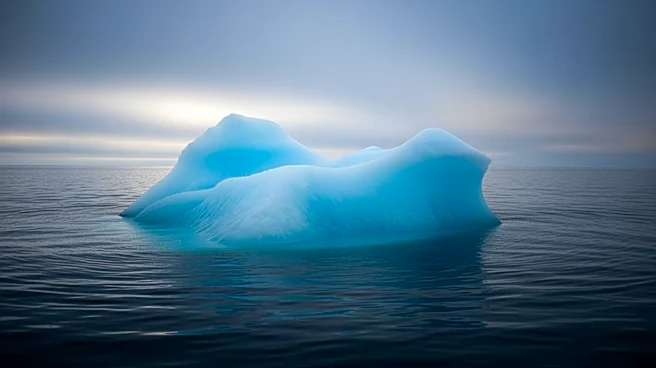
A new study reveals that rising oceanic heat is causing Antarctic ice to melt from below, potentially accelerating catastrophic climate events. Researchers from the University of Cambridge and the University of California
have focused on the movement of the circumpolar deep water, a warm, salty mass that has expanded and moved toward the Antarctic continental shelf over the past 20 years. This movement threatens to destabilize ice shelves, which act as barriers holding back inland ice sheets and glaciers. The study highlights the role of the Southern Ocean in regulating global heat and carbon storage, with changes in heat distribution having wider implications for the global climate system.
Why It's Important?
The melting of Antarctic ice from below could lead to significant sea level rise and other global climate effects. The destabilization of ice shelves could result in the release of vast amounts of water currently held in glaciers, raising sea levels and impacting coastal communities worldwide. Additionally, changes in ocean currents, such as the weakening of the Atlantic Meridional Overturning Circulation, could disrupt ecosystems and global food production. Understanding these changes is crucial for predicting and mitigating the impacts of climate change on a global scale.