
What's Happening?
Russia has claimed full control over Ukraine's Luhansk region, a statement met with skepticism by Ukrainian officials and analysts. Despite Russia's assertion, the frontlines have seen little change, and Ukrainian forces
continue to resist. The Institute for the Study of War reports that Russian advances have slowed, with Ukrainian forces making gains in some areas. The announcement is seen as an attempt to portray Russian progress and pressure Ukraine into ceding territory. Ukrainian President Volodymyr Zelensky has highlighted the ongoing challenges, including personnel shortages and the impact of the Middle East conflict on military resources.
Why It's Important?
The claim of control over Luhansk is part of Russia's broader strategy to assert dominance in Eastern Ukraine, a region of significant strategic and symbolic importance. The ongoing conflict has severe implications for regional stability and international relations, particularly as it involves major global powers. The situation underscores the challenges in achieving a diplomatic resolution and the potential for further escalation. The conflict also affects global perceptions of military power and the effectiveness of international support for Ukraine.
What's Next?
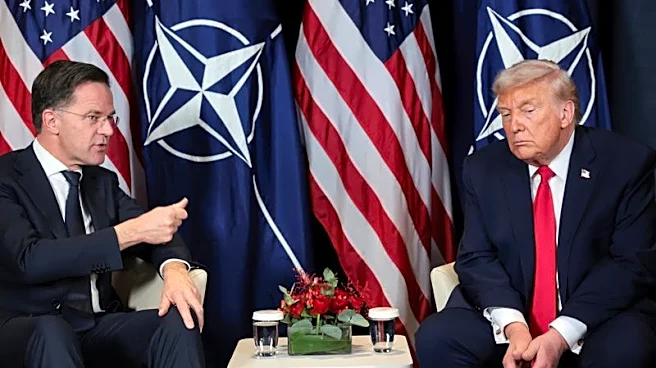
The conflict in Eastern Ukraine is likely to continue, with both sides engaging in military operations and strategic maneuvers. International diplomatic efforts may intensify, but the path to peace remains uncertain. The situation could influence future geopolitical alignments and military strategies, particularly in relation to NATO and European security. Monitoring developments in military tactics and international diplomatic engagements will be crucial in understanding the conflict's trajectory.