







What's Happening?
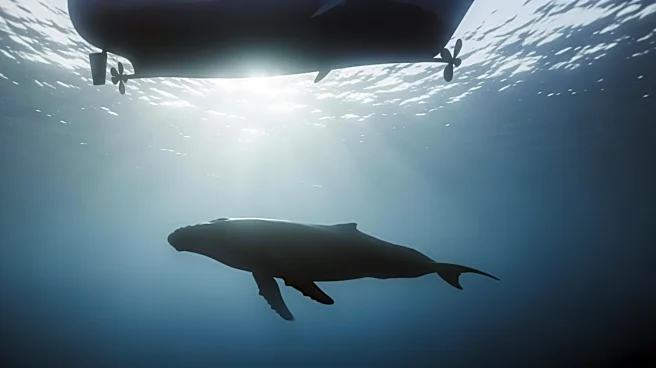
A recent study published in the journal Frontiers in Marine Science reveals that gray whales in San Francisco Bay are dying at alarming rates, primarily due to collisions with vessels. Since 2018, at least 18% of gray whales entering the bay have died,
with over 40% of these deaths attributed to blunt force trauma from vessel strikes. The study highlights the increased presence of Eastern North Pacific gray whales in the bay, a trend linked to climate-driven shifts in prey availability in the Arctic. The Southwest Fisheries Science Center estimates the gray whale population at around 13,000, the lowest since 1970. Efforts to mitigate vessel collisions include educational programs for vessel operators and technological solutions like AI and thermal imaging to detect whales.
Why It's Important?
The study underscores the urgent need for measures to protect gray whales, a species already facing population declines due to environmental changes. The high mortality rate from vessel strikes poses a significant threat to the sustainability of the gray whale population. This issue highlights the broader impact of human activities on marine life and the need for effective management of maritime traffic to prevent further harm. The findings could influence policy changes, such as mandatory speed limits for vessels and improved monitoring of shipping lanes to protect marine wildlife.
What's Next?
The study's findings may lead to increased advocacy for federal action to reduce vessel collisions with whales. Conservation groups might push for mandatory speed reductions and better enforcement of existing regulations. The U.S. Coast Guard and National Marine Fisheries Service could face pressure to reassess shipping routes and implement measures to minimize harm to marine life. Continued research and monitoring will be crucial to understanding the full impact of vessel traffic on gray whale populations and developing effective conservation strategies.