



What's Happening?
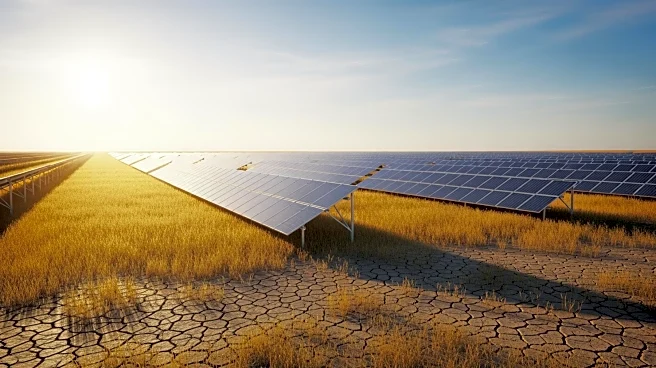
A significant solar farm project is advancing in California's San Joaquin Valley, driven by a collaboration between local farmers and Golden State Clean Energy. The project aims to cover 200 square miles and generate 21,000 megawatts of electricity, enough
to power entire cities. This initiative comes as farmers face a severe water shortage, exacerbated by droughts and new state laws limiting groundwater pumping. The Westlands Water District, a farmer-run organization, is negotiating with solar companies to repurpose fallowed farmland for solar energy production. The project requires the construction of new power lines to transport electricity to major urban centers like Los Angeles and Silicon Valley. Despite the removal of some federal incentives for solar projects, the developers see this as a viable business opportunity.
Why It's Important?
This solar farm project represents a critical shift in land use for California's agricultural sector, which is grappling with water scarcity. By converting unused farmland into solar energy sites, farmers can secure a stable income while contributing to the state's renewable energy goals. The project could serve as a model for other regions facing similar water challenges, potentially transforming large swathes of agricultural land into renewable energy hubs. However, there are concerns about the impact on local farmworkers, who may lose jobs as traditional farming declines. The project's success could influence future policies and investments in renewable energy infrastructure across the state.
What's Next?
The next steps involve obtaining approval from California's electrical grid managers for the necessary power lines. Construction of the solar farm and associated infrastructure could take up to a decade. Discussions are ongoing regarding a community benefits package to support local towns affected by the transition from agriculture to solar energy. The outcome of these negotiations will be crucial in determining the project's social and economic impact on the region.
Beyond the Headlines
The project highlights the broader implications of climate change and resource management in California. As water becomes increasingly scarce, innovative solutions like this solar farm could redefine the state's agricultural landscape. The initiative also raises questions about equitable distribution of benefits, as local communities seek assurances that they will share in the economic gains from renewable energy development.