



What's Happening?
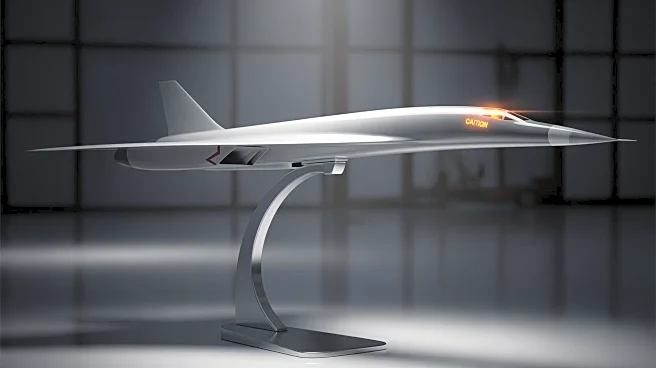
NASA's X-59 supersonic research plane encountered an unexpected issue during its second-ever flight, which lasted only nine minutes. The test flight, conducted from NASA's Armstrong Flight Research Center in California, was intended to perform subsonic
handling and systems checks over the Mojave Desert. However, a cockpit warning light forced test pilot Jim 'Clue' Less to return the aircraft to Edwards Air Force Base. Despite the early termination, the X-59 achieved speeds and altitudes similar to its first flight in October, reaching approximately 230 mph and 12,000 feet. The X-59 is part of NASA's Quesst mission, which aims to demonstrate that supersonic aircraft can fly over land with reduced sonic booms. The aircraft is now back in the hangar for evaluation, and the team is determining the next steps.
Why It's Important?
The X-59's development is crucial for the future of commercial supersonic travel, as it seeks to address the noise pollution associated with traditional sonic booms. Successful demonstration of reduced noise levels could pave the way for regulatory changes, allowing supersonic flights over land. This advancement holds significant implications for the aviation industry, potentially leading to faster travel times and new market opportunities. However, the recent setback highlights the challenges in developing cutting-edge aerospace technology. The incident underscores the importance of rigorous testing and evaluation to ensure safety and reliability in future flights.
What's Next?
NASA and Lockheed Martin are currently assessing the issue that caused the warning light to illuminate. The aircraft is undergoing thorough inspections to identify and rectify the problem. Preparations for the third flight will likely involve extensive checks to prevent similar occurrences. The data collected from these test flights will be crucial in refining the X-59's design and performance. As the project progresses, stakeholders in the aviation industry will be closely monitoring developments, as successful outcomes could influence future aircraft designs and regulatory frameworks.