









What's Happening?
The World Health Organization (WHO) has reported that 80% of new Ebola cases in eastern Congo are emerging from unknown chains of transmission. This indicates that the outbreak is spreading faster than health officials can track, despite efforts to expand
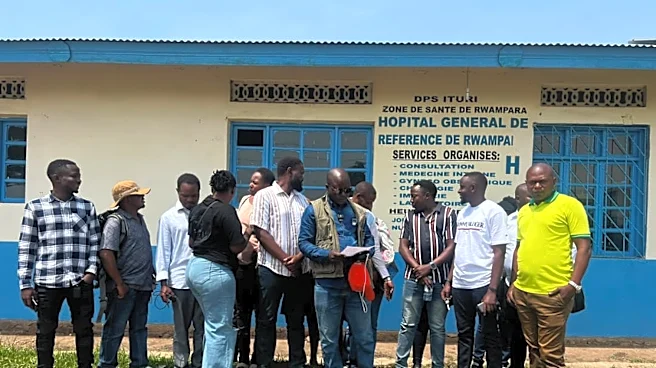
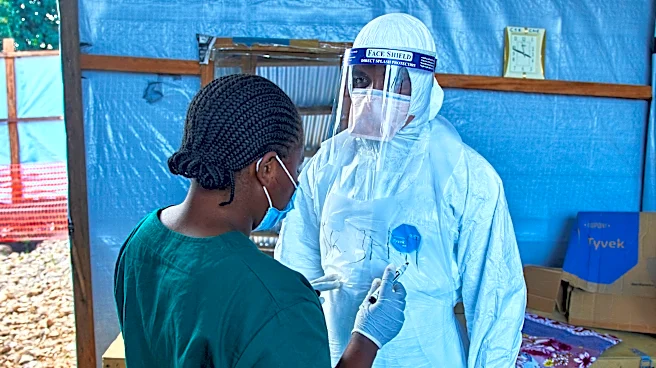
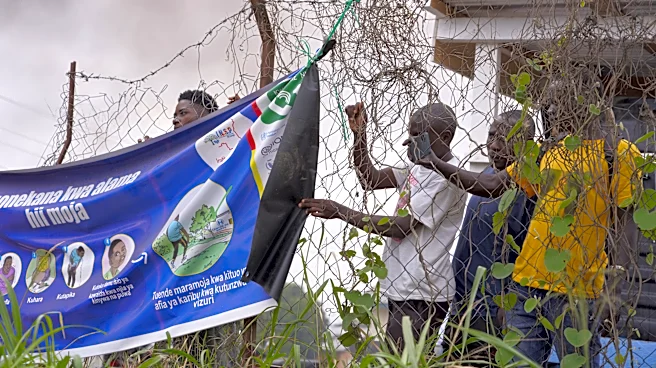
the response. The outbreak, which began in May, involves a rare type of Ebola virus, and there is currently no approved treatment or vaccine. The Africa Centres for Disease Control has noted that this is the fastest-growing Ebola outbreak on the continent. Many of the newly reported deaths are occurring in communities without the individuals having reached health facilities, which complicates efforts to isolate, treat, and trace contacts. As of the latest reports, 1,926 people have been infected, with 702 deaths across three provinces in Congo. The outbreak has also spread to neighboring Uganda. Efforts to increase treatment and lab capacity are ongoing, but challenges such as funding gaps, attacks on health centers, and local mistrust continue to hinder the response.
Why It's Important?
The rapid spread of Ebola in Congo poses significant public health challenges, not only for the affected regions but also for global health security. The inability to trace the majority of new cases complicates containment efforts and increases the risk of further transmission. This situation underscores the need for robust health infrastructure and international support to manage outbreaks effectively. The outbreak's expansion into Uganda highlights the potential for cross-border transmission, which could lead to a broader regional health crisis. The ongoing conflict and mistrust in eastern Congo further exacerbate the situation, making it difficult for health workers to operate effectively. The strike by healthcare workers over unpaid salaries also highlights the systemic issues within the healthcare response framework, which could lead to further disruptions in care and containment efforts.
What's Next?
Efforts to contain the outbreak will likely continue to focus on increasing treatment and lab capacity, as well as addressing the funding and logistical challenges faced by health workers. The Congolese government and international health organizations may need to enhance community engagement strategies to build trust and improve cooperation with local populations. The recent clinical trials for treatment offer a glimmer of hope, but their success will depend on overcoming the current operational challenges. The international community may need to provide additional support to ensure that healthcare workers are adequately compensated and that resources are available to sustain the response efforts. Monitoring the situation in neighboring countries will also be crucial to prevent further spread.