







What's Happening?
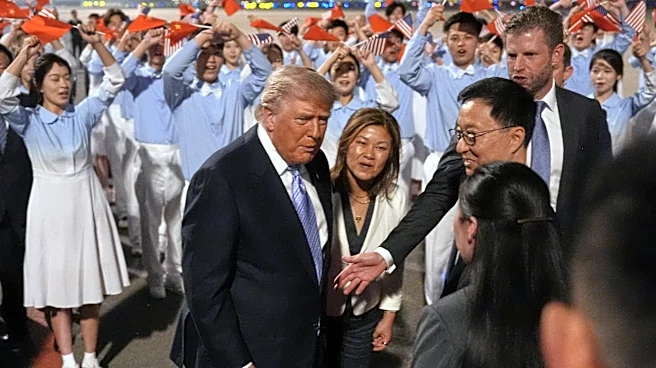
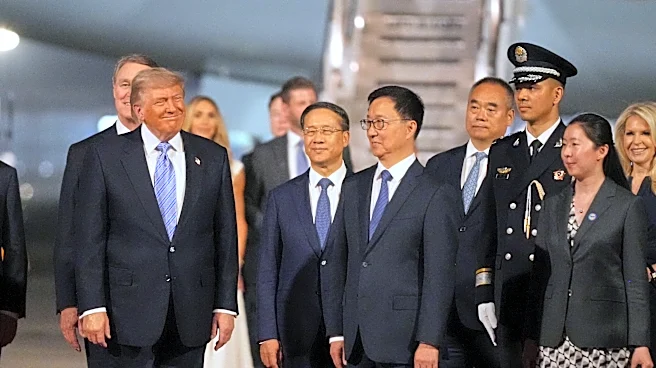
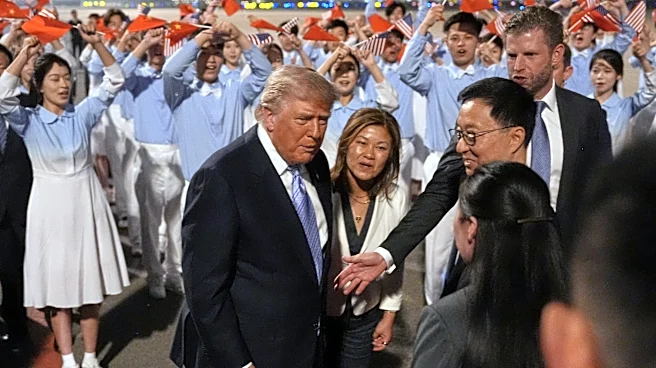
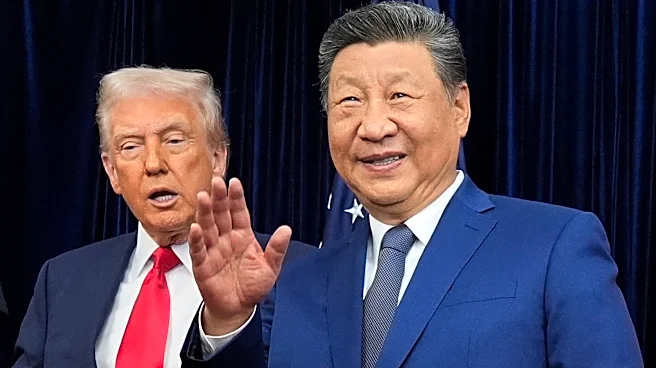
President Trump and Chinese leader Xi Jinping met in Beijing, where Xi warned that differences over Taiwan could lead to conflict between the U.S. and China. Taiwan, a self-governing island claimed by China, remains a contentious issue. The U.S. has historically
supported Taiwan's defense without formal diplomatic ties, maintaining a policy of strategic ambiguity. During the summit, Xi emphasized Taiwan as the most important issue in China-U.S. relations, urging caution in handling the matter to avoid jeopardizing bilateral stability. The meeting also covered economic cooperation and geopolitical issues, including the Middle East and the Strait of Hormuz.
Why It's Important?
The Taiwan issue is a significant point of tension in U.S.-China relations, with potential implications for global stability. The U.S. continues to support Taiwan militarily, which China views as a threat to its territorial claims. Any escalation could impact international trade and security, given Taiwan's strategic location and economic significance. The summit's outcome may influence future U.S. foreign policy and military strategy in the Asia-Pacific region, affecting global markets and diplomatic relations.
What's Next?
Future interactions between the U.S. and China will likely focus on managing tensions over Taiwan while seeking areas of cooperation. The U.S. may continue arms sales to Taiwan, further straining relations with China. Both countries will need to navigate these challenges to maintain regional stability and avoid conflict. The international community will closely watch for any shifts in U.S. policy or Chinese actions regarding Taiwan.