



What's Happening?
The American Heart Association, in collaboration with Laerdal Medical, has launched a new nationwide Self-Guided Learning model for resuscitation training. This initiative aims to provide flexible, science-based training options for individuals in healthcare,
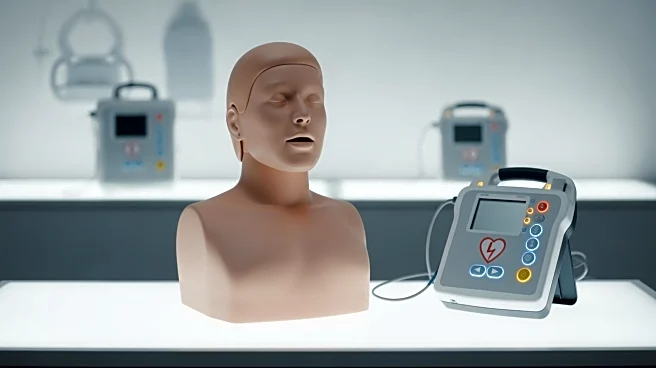
workplace safety, and emergency response roles. The Self-Guided Learning model allows participants to complete Basic Life Support (BLS), Advanced Cardiac Life Support (ACLS), and Pediatric Advanced Life Support (PALS) courses at their convenience. The training includes a self-paced online component and a hands-on skills session at a CPR Verification Station, which uses advanced simulation technology for real-time feedback. This model is designed to address the challenges of balancing demanding schedules and limited access to in-person instruction, expanding the Association's global CPR training footprint.
Why It's Important?
This development is significant as it enhances access to essential resuscitation training, which is crucial for healthcare professionals and emergency responders. By offering a flexible training model, the American Heart Association and Laerdal Medical are removing barriers to education, potentially increasing the number of trained individuals capable of responding to cardiac emergencies. This initiative supports the goal of doubling cardiac arrest survival rates by 2030. The model's flexibility is particularly beneficial for remote and rural healthcare workers, who often face logistical challenges in accessing traditional training. The initiative also reflects a broader trend towards digital and self-paced learning in professional development.
What's Next?
The Self-Guided Learning model is currently available in 47 states, with plans to expand to all 50 states. The American Heart Association and Laerdal Medical will continue to promote this training option, aiming to increase its adoption among healthcare professionals and organizations. As the program expands, it may lead to further innovations in training delivery and potentially influence other areas of medical education. Stakeholders, including healthcare institutions and emergency services, are likely to monitor the program's impact on training outcomes and cardiac arrest survival rates.