



What's Happening?
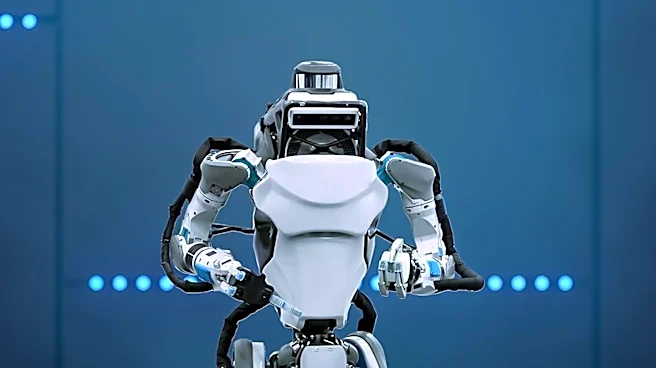
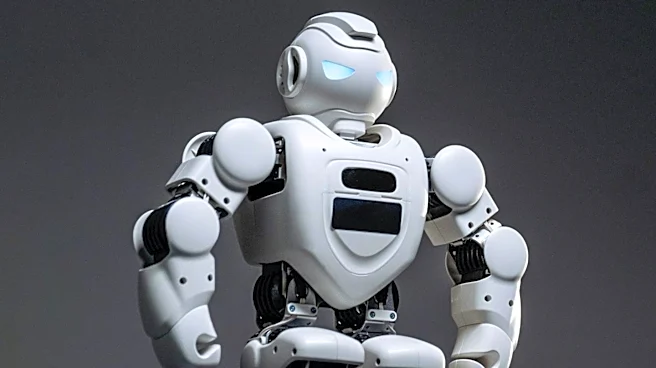
IEEE Spectrum has showcased recent developments in the field of robotics, particularly focusing on Physical AI and humanoid robots. The publication highlights the progress made by various robotics teams, including the creation of GENE.01, a humanoid platform
capable of walking and interacting with its environment. This platform features a full-body multimodal skin that perceives touch, proximity, force, and temperature, marking a significant step towards safe and natural human-robot collaboration. The article also discusses advancements in robot intelligence, emphasizing the ability of robots to learn from multiple sensorimotor interfaces.
Why It's Important?
The advancements in Physical AI and robotics have significant implications for various industries, including healthcare, manufacturing, and service sectors. The development of humanoid robots with enhanced sensory capabilities could lead to more efficient and safer human-robot interactions, potentially transforming how tasks are performed in environments that require precision and adaptability. These innovations also highlight the growing convergence of AI and robotics, which could lead to the creation of more versatile and intelligent machines capable of performing complex tasks autonomously.
What's Next?
As these technologies continue to evolve, we can expect to see increased integration of humanoid robots in various sectors. Future developments may focus on enhancing the cognitive abilities of robots, enabling them to perform more complex tasks and interact more naturally with humans. This could lead to broader adoption of robotics in everyday life, from healthcare and elder care to logistics and customer service. The ongoing research and development in this field will likely drive further innovation, leading to new applications and opportunities for collaboration between humans and machines.