






What's Happening?
U.S. Senators John Curtis (R-UT), Dave McCormick (R-PA), John Hickenlooper (D-CO), John Hoeven (R-ND), and Catherine Cortez Masto (D-NV) have jointly introduced the Rural and Municipal Utility Cybersecurity Act. This bipartisan legislation aims to reauthorize
a crucial federal grant program designed to enhance the cybersecurity defenses of rural electric cooperatives and municipal utilities. The bill seeks to extend the Rural and Municipal Utility Advanced Cybersecurity (RMUC) Grant and Technical Assistance Program, administered by the Department of Energy. This program provides essential resources, technical assistance, and support to these utilities, enabling them to prevent, detect, respond to, and recover from increasingly sophisticated cyberattacks. Senator Hickenlooper emphasized that the bill will help rural cooperatives and utilities defend against attacks, protect consumers, and maintain affordable energy amidst rising cybersecurity threats.
Why It's Important?
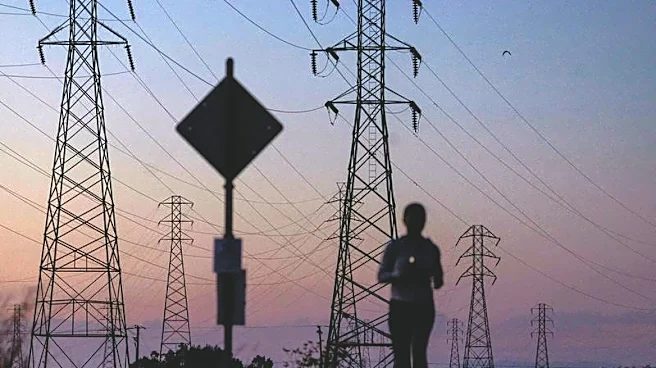
This bipartisan legislation is critical for national security and economic stability, as America's electric grid is a vital piece of infrastructure increasingly targeted by malicious actors and foreign adversaries. Rural electric cooperatives and municipal utilities often operate with fewer cybersecurity resources compared to larger utilities, making them particularly vulnerable. A successful cyberattack on these utilities could lead to widespread power outages, disrupting essential services, impacting local economies, and potentially jeopardizing public safety. By strengthening the cybersecurity capabilities of these smaller utilities, the bill aims to fortify the entire national grid, ensuring reliable and secure energy for millions of Americans. This proactive approach helps to close resource gaps, protect critical infrastructure, and maintain the resilience of the electrical grid against evolving cyber threats.
What's Next?
The Rural and Municipal Utility Cybersecurity Act proposes to reauthorize the RMUC Grant and Technical Assistance Program through 2031, with an authorization of $250 million over five years to support these efforts. The legislation will continue to provide grants and technical assistance for cybersecurity planning, workforce development, vulnerability assessments, and other activities crucial for improving grid resilience. Given that companion legislation was unanimously passed by the House of Representatives earlier this year, there is strong bipartisan support for this initiative. The next steps will involve the bill moving through the Senate for consideration and a vote. If passed, it will ensure continued federal investment in protecting the nation's energy infrastructure, fostering stronger partnerships between the federal government and locally owned utilities to combat cyber threats.
Beyond the Headlines
Beyond the immediate goal of enhancing cybersecurity, this legislation highlights the growing recognition of cyber warfare as a significant threat to critical infrastructure. It underscores the need for a comprehensive national strategy that includes all levels of utility providers, not just the largest ones. The focus on rural and municipal utilities also points to issues of equitable resource distribution and the importance of supporting smaller entities that are often overlooked in national security discussions. This initiative could foster greater collaboration between government agencies, private sector cybersecurity firms, and local utilities, leading to the development of innovative defense mechanisms and best practices. Furthermore, it emphasizes the importance of workforce development in cybersecurity, addressing the shortage of skilled professionals needed to protect these vital systems. The long-term implications include a more resilient and secure national energy grid, better prepared to withstand future cyber challenges.