






What's Happening?
Gorham, Maine, is actively considering new restrictions on automated license plate reading (ALPR) cameras, cooperation with U.S. Immigration and Customs Enforcement (ICE), and the development of data centers. The Town Council recently voted to send these
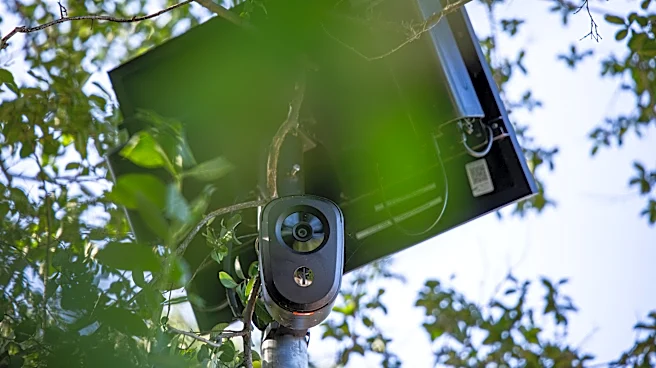
issues to its ordinance committee or planning board for review. Town Councilor Seven Siegel, who sponsored these initiatives, stated that the aim is to proactively prevent issues that have arisen in other towns. ALPR cameras, often referred to as Flock cameras, use artificial intelligence to scan and log vehicle information, marketed as law enforcement tools. Critics argue these cameras infringe upon Fourth Amendment protections and express concerns about data misuse, particularly its potential use by federal immigration authorities. South Portland recently terminated its contract with Flock Safety due to resident objections, and York residents will vote on banning the cameras in November. Additionally, the ordinance committee will consider banning municipal staff from assisting federal officials with immigration enforcement unless acting on an arrest warrant, extending a state law that already limits such cooperation. The town is also reviewing a potential permanent ban on data centers, following a temporary moratorium, due to concerns about their impact on local resources and infrastructure.
Why It's Important?
This development in Gorham reflects a growing national debate over privacy, civil liberties, and local control versus federal authority. The discussion around ALPR cameras highlights the tension between public safety and individual privacy rights, as well as concerns about surveillance technology's potential for mission creep and data exploitation. The proposed restrictions on ICE cooperation underscore a broader movement in some municipalities to limit local involvement in federal immigration enforcement, often driven by humanitarian concerns and a desire to build trust within immigrant communities. The consideration of banning data centers points to emerging environmental and resource concerns associated with large-scale technological infrastructure, including energy consumption and water usage, which can strain local utilities and impact community character. These local decisions in Gorham could set precedents for other towns in Maine and beyond, influencing how communities balance technological advancement, public safety, and civil liberties.
What's Next?
The Gorham ordinance committee and planning board will now review the proposed restrictions on ALPR cameras, ICE cooperation, and data centers. This process will likely involve public hearings, expert testimony, and detailed discussions to draft specific ordinances. For ALPR cameras, the committee will determine the scope of restrictions, including whether to ban them entirely for the Gorham Police Department and how to address their use by entities like the University of Southern Maine. Regarding ICE cooperation, the committee will work to align a local ordinance with existing state law, potentially extending limitations to all town employees. The planning board will hold a public hearing on the data center ban, which could lead to a permanent change in the town's land use and development code. The outcomes of these reviews will determine the future policies of Gorham on these contentious issues, potentially influencing similar debates in other Maine municipalities.
Beyond the Headlines
The actions being considered in Gorham delve into the fundamental questions of governance in the digital age and the balance of power between local communities and larger governmental or corporate entities. The debate over ALPR cameras, for instance, is not just about surveillance but also about the commodification of public data and the potential for a 'surveillance capitalism' model to permeate local law enforcement. The push to limit ICE cooperation reflects a broader societal shift towards defining 'sanctuary' at the local level, challenging federal immigration policies and asserting community values. The moratorium and potential ban on data centers highlight a nascent environmental justice movement within the tech sector, where communities are pushing back against the resource-intensive nature of digital infrastructure. These discussions in Gorham are microcosms of larger national conversations about privacy in a technologically advanced society, the role of local government in protecting vulnerable populations, and the environmental footprint of the digital economy, all of which have long-term implications for civil liberties, community autonomy, and sustainable development.