








What's Happening?
The developer of a Midtown Manhattan tower, Metro Loft, has announced plans to reconstruct 15 floors of the building following an evacuation due to structural concerns. The building, located at 235 East 42nd Street, was originally the headquarters of Pfizer
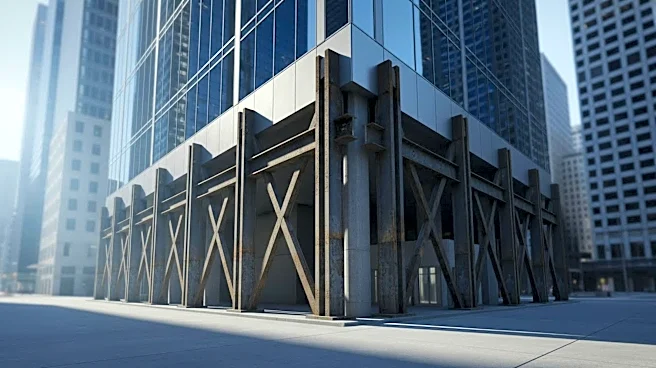
Inc. and is undergoing conversion into residential apartments. The issue arose when two columns on the 21st floor, which is taller than others, were found to be insufficiently reinforced, causing them to bend and some of the 15 cantilevered floors above to sag. Metro Loft plans to replace the facade, slabs, and steel on these floors. Temporary supports are being installed, and the streets have reopened after city officials deemed the tower stable. However, a partial stop-work order has been issued to halt non-emergency construction. The structural concerns affect less than 30 apartments out of the planned 1,600, and the developer is confident that the project will remain on schedule.
Why It's Important?
This incident highlights the engineering challenges associated with converting office buildings into residential spaces, a strategy increasingly used to address New York City's housing shortage. The safety concerns and subsequent evacuation underscore the complexities and risks involved in such conversions, which require significant architectural modifications. The situation also raises questions about the adequacy of current building codes and the need for rigorous inspections and testing. The outcome of this project could influence future office-to-residential conversions, impacting developers, city planners, and residents. The incident has not deterred enthusiasm for such projects, as they are seen as a viable solution to the housing crisis.
What's Next?
Metro Loft is awaiting further instructions from city officials after completing the shoring and stabilization of the building. A detailed analysis and inspection will be necessary to address the structural issues, which could take several months. The city plans to conduct a full investigation into the problems at the site. Despite the setback, the developer remains optimistic about meeting the original timeline for the project's completion. The incident may prompt a review of building codes and regulations related to office-to-residential conversions, potentially leading to more stringent safety standards.