
What's Happening?
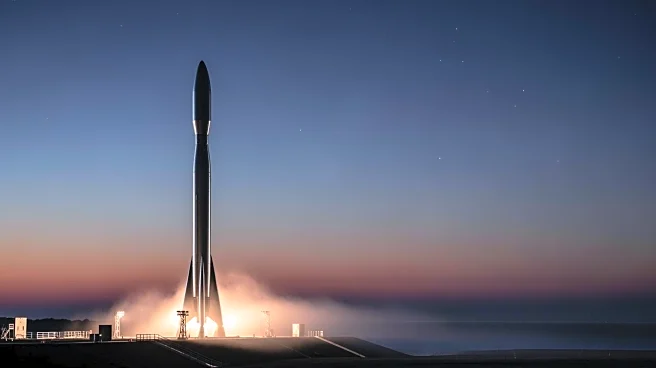
The Soyuz rocket is scheduled to launch the first Obzor radar satellite on December 24, 2025, from the Plesetsk Cosmodrome in Russia. The Obzor-R1 satellite, part of a long-delayed project by the Roskosmos
State Corporation, is designed for all-weather imaging and will be placed into a near-polar orbit. The mission, initially planned for 2019, faced multiple delays due to development challenges with the radar instrument. The launch is part of Russia's Federal Space Program and involves a classified mission profile, with the satellite expected to join other radar-equipped satellites for comprehensive Earth observation.
Why It's Important?
The launch of the Obzor-R1 satellite represents a significant advancement in Russia's space capabilities, particularly in the field of radar imaging. This technology allows for detailed observation of the Earth's surface regardless of weather conditions or time of day, enhancing both civilian and military applications. The successful deployment of the satellite could bolster Russia's position in the global space industry, providing valuable data for environmental monitoring, disaster management, and national security. The mission also highlights the strategic importance of space technology in modern geopolitics, as countries seek to expand their capabilities in satellite surveillance and reconnaissance.
What's Next?
Following the launch, the Obzor-R1 satellite will undergo a series of tests to ensure its systems are functioning correctly. If successful, the satellite will begin its operational phase, contributing to Russia's Earth observation network. The mission's outcome could influence future satellite launches and the development of similar technologies. Additionally, the international community will likely monitor the satellite's performance and its implications for global satellite imaging capabilities. The launch may also prompt discussions on space cooperation and competition, as countries evaluate their own space programs in response to Russia's advancements.