




What's Happening?
Union troops arrived in Galveston, Texas, on June 19, 1865, to enforce the Emancipation Proclamation, marking the first Juneteenth. The Emancipation Proclamation, issued by President Abraham Lincoln on January 1, 1863, declared the freedom of enslaved
people in Confederate states. However, the news of emancipation spread slowly, with many enslaved individuals learning of their freedom through informal networks and Union soldiers. The proclamation did not apply to slaveholding states that remained in the Union, such as Delaware, Maryland, Kentucky, Missouri, and West Virginia, leading to frustration among enslaved people in those areas. Despite this, the moral force of the proclamation contributed to the eventual abolition of slavery with the ratification of the 13th Amendment in December 1865.
Why It's Important?
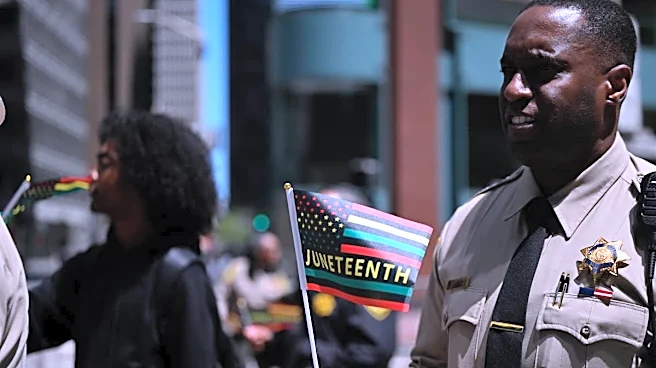
Juneteenth is a significant historical event that symbolizes the end of slavery in the United States and the struggle for freedom and equality. It highlights the slow dissemination of emancipation news and the challenges faced by enslaved people in gaining their freedom. The enforcement of the Emancipation Proclamation by Union troops in Texas underscores the federal government's role in ending slavery and the importance of military intervention in ensuring the rights of African Americans. Juneteenth has become a day of celebration and reflection on the progress made towards racial equality and the ongoing fight against systemic racism in the U.S.
What's Next?
Juneteenth continues to be celebrated as a day of freedom and reflection, with increasing recognition as a national holiday. The event serves as a reminder of the ongoing need for education and awareness about the history of slavery and the contributions of African Americans to the nation's development. As the U.S. grapples with issues of racial inequality and social justice, Juneteenth provides an opportunity for dialogue and action towards a more equitable society.