






What's Happening?
Recent archaeological findings from Tinshemet Cave in Israel have unveiled that Neanderthals and Homo sapiens shared cultural and social practices during the mid-Middle Paleolithic period. The site, located in the Levant region, has provided evidence
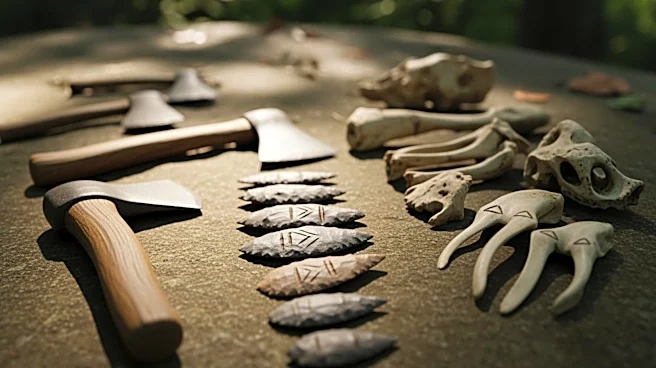
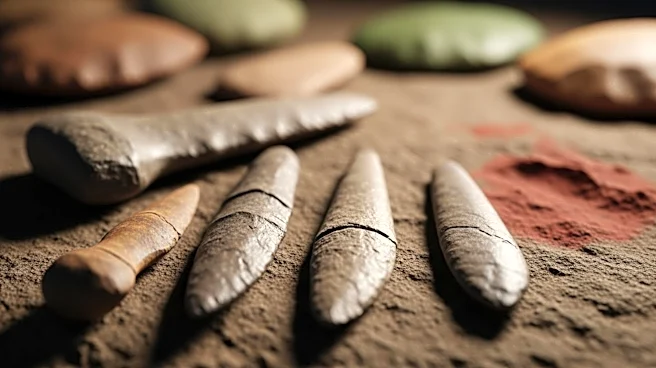
of intentional burials, shared tool-making techniques, and the use of ochre in burial sites. These findings suggest that rather than being adversaries, Neanderthals and early humans were collaborators, sharing survival techniques and cultural practices. The research, led by Prof. Yossi Zaidner and his team, indicates that these groups engaged in significant interactions, leading to a blending of cultures. The study highlights the complexity of relationships between different hominin species, challenging previous notions of rivalry.
Why It's Important?
The discovery at Tinshemet Cave is significant as it reshapes the understanding of human evolution and interaction. It suggests that cultural and technological advancements were driven by cooperation and exchange between different human groups, including Neanderthals and Homo sapiens. This challenges the traditional view of prehistoric human groups as isolated entities and highlights the importance of social interactions in human development. The findings could influence future research on human evolution, providing insights into how cultural and technological innovations were shared and developed across different populations.
What's Next?
As excavations continue at Tinshemet Cave, researchers anticipate uncovering more evidence that could further illuminate the nature of interactions between Neanderthals and early humans. Future discoveries may include additional burial sites, artifacts, or symbolic inscriptions that could provide deeper insights into the social and cultural dynamics of these prehistoric populations. The ongoing research aims to expand the understanding of how these interactions influenced the development of human societies.
Beyond the Headlines
The findings from Tinshemet Cave also raise questions about the ethical implications of how prehistoric human interactions are interpreted. The evidence of shared cultural practices suggests a more nuanced understanding of human history, where cooperation played a crucial role in survival and development. This could lead to a reevaluation of how modern societies view cultural exchange and collaboration, emphasizing the benefits of diversity and shared knowledge.