







What's Happening?
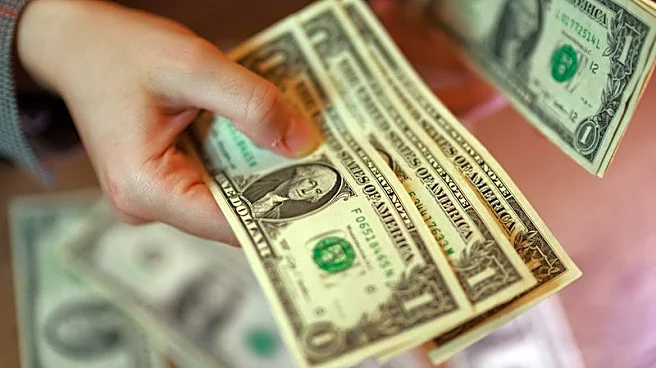
A significant drop in the value of the U.S. dollar against the Israeli shekel has led to a nationwide shortage of U.S. currency in Israel. The dollar recently fell below the three-shekel threshold, prompting Israelis to purchase large amounts of U.S. dollars
in anticipation of a potential rebound. This surge in demand has resulted in money changers running out of dollars quickly, exacerbated by delays in overseas cash shipments due to ongoing security tensions with Iran and Hezbollah. The shortage is also affecting other currencies, such as the British pound and Swiss franc, which have also seen increased demand.
Why It's Important?
The shortage of U.S. dollars in Israel highlights the economic impact of geopolitical tensions on currency markets. The strong shekel poses challenges for Israeli exporters, as a weaker dollar reduces their profit margins, potentially leading to production cuts and job losses. This situation underscores the interconnectedness of global markets and the influence of political stability on economic conditions. The manufacturing sector, in particular, is at risk, with industry leaders warning of potential closures and relocations if the exchange rate remains unfavorable.
What's Next?
The Israeli government and financial institutions may need to implement measures to stabilize the currency market and support exporters. This could include interventions by the Bank of Israel to adjust interest rates or currency reserves. Additionally, the resumption of regular cash shipments is expected to alleviate the immediate shortage. However, ongoing geopolitical tensions could continue to influence currency fluctuations, requiring ongoing monitoring and strategic responses from both the public and private sectors.