







What's Happening?
State officials have confirmed the first known case of oak wilt in Monroe County, New York, after an infected tree was identified in the town of Greece. The New York State Department of Environmental Conservation (DEC) notified the town that one of its
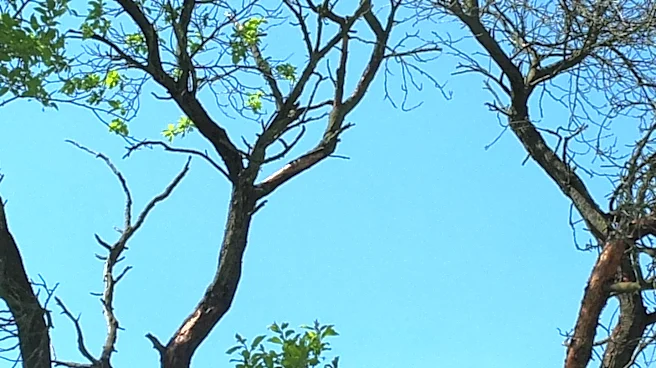
oak trees tested positive for the fungal disease, which is often fatal to oak trees. Oak wilt is caused by the fungus Bretziella fagacearum, which obstructs the movement of water and nutrients within infected trees, leading to symptoms such as wilting leaves, early leaf drop, and branch dieback. The disease was first detected in New York in 2008 and has largely remained confined to isolated areas in the Finger Lakes, including parts of Ontario and Yates counties. The fungus spreads primarily through sap-feeding and bark beetles attracted to fresh wounds on oak trees and can also spread underground through connected root systems between neighboring oak trees.
Why It's Important?
The confirmation of oak wilt in Monroe County is significant as it poses a threat to the local oak tree population, which is a vital part of the region's ecosystem and landscape. The disease can lead to the death of infected trees, potentially altering the local environment and affecting biodiversity. The spread of oak wilt could also have economic implications, impacting industries reliant on oak trees, such as timber and landscaping. Additionally, the presence of the disease in a new area raises concerns about its potential spread to other regions, necessitating increased monitoring and preventive measures. The town of Greece, in collaboration with the DEC, is taking steps to contain the spread by removing the infected tree and treating the stump, as well as monitoring nearby oak trees.
What's Next?
Residents in the affected area are being asked to watch for signs of oak wilt and report any suspected cases to the DEC. The town of Greece is working closely with the DEC to respond to this case quickly and responsibly. Officials are advising homeowners to avoid pruning or damaging oak trees between March and September, when beetles that spread the fungus are most active. Additionally, residents are reminded to follow New York's firewood regulations, which limit transporting untreated firewood more than 50 miles from its source. These measures aim to prevent further spread of the disease and protect the local oak tree population.