




What's Happening?
Katalyst Space Technologies' Link spacecraft, launched on July 3, 2026, is experiencing attitude control issues that threaten its mission to boost the orbit of NASA's Swift Observatory. The spacecraft is in a 'multi-axis spin,' affecting communications
and causing a temporary loss of control. Two of the three reaction wheels are not functioning, and the reaction control system thrusters are only partially operational. Despite these challenges, Katalyst is working to stabilize the spacecraft using electric propulsion thrusters and plans to update its guidance systems.
Why It's Important?
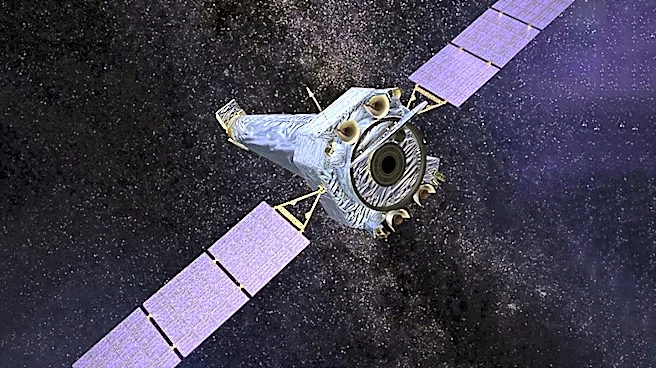
The success of the Link mission is critical for extending the operational life of the Swift Observatory, which is in a decaying orbit and at risk of reentry. The mission represents a significant investment by NASA, with a $30 million contract awarded to Katalyst Space. The technical difficulties highlight the complexities and risks associated with space missions, particularly those involving in-orbit servicing and reboost operations. The outcome of this mission could influence future strategies for maintaining and extending the life of valuable space assets.
What's Next?
Katalyst Space is actively working to resolve the attitude control issues and stabilize the spacecraft. The company plans to conduct a series of burns to reduce the spacecraft's spin and update its control systems. If successful, the mission will proceed with its approach to the Swift Observatory for the reboost operation. The mission's progress will be closely monitored by NASA and the space community, as its success could pave the way for more frequent and reliable in-orbit servicing missions.