





What's Happening?
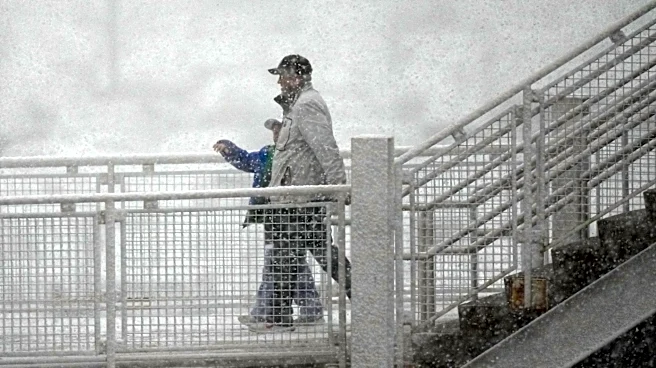
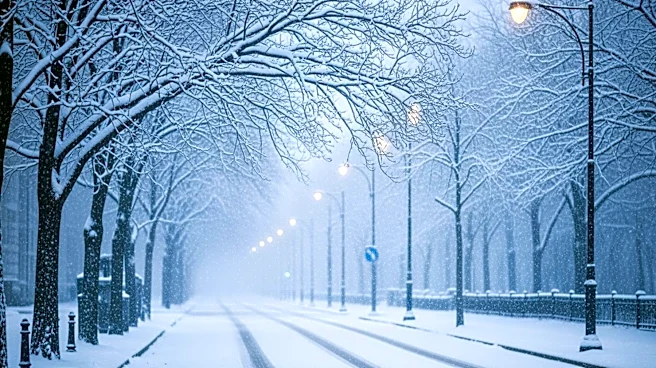
Denver and surrounding areas in Colorado are experiencing a significant snowstorm, which began with rain transitioning to heavy snow on Tuesday evening. The temperature in Denver was recorded at 34 degrees, causing initial snow to not stick, but conditions
are expected to worsen as temperatures drop. The storm has led to slick roads, particularly affecting areas like the foothills and Interstate 70, where a jack-knifed semi-truck caused delays. As a result, Denver Public Schools and other districts have announced closures for Wednesday. The storm is also impacting air travel, with de-icing operations underway at Denver International Airport. The city is projected to receive 3 to 6 inches of snow, with heavier accumulations in the northern and central mountains.
Why It's Important?
The snowstorm is significant as it disrupts daily life in Denver and surrounding areas, affecting school operations, travel, and safety. The closure of schools impacts families and the education system, while hazardous road conditions pose risks to commuters and emergency services. The storm also affects air travel, potentially causing delays and cancellations. The broader impact includes economic implications for businesses and services that rely on transportation and mobility. Additionally, the storm highlights the challenges of weather-related disruptions in urban planning and infrastructure resilience.
What's Next?
As the storm progresses, further snow accumulation is expected, particularly in mountainous regions. Authorities, including the Colorado Department of Transportation, are deploying snowplows and monitoring road conditions to ensure safety. Freeze warnings and watches are anticipated following the storm, which could lead to further disruptions. Residents and businesses will need to prepare for continued adverse weather conditions and potential impacts on services and infrastructure. The situation underscores the importance of effective emergency response and communication strategies in managing weather-related challenges.