
What's Happening?
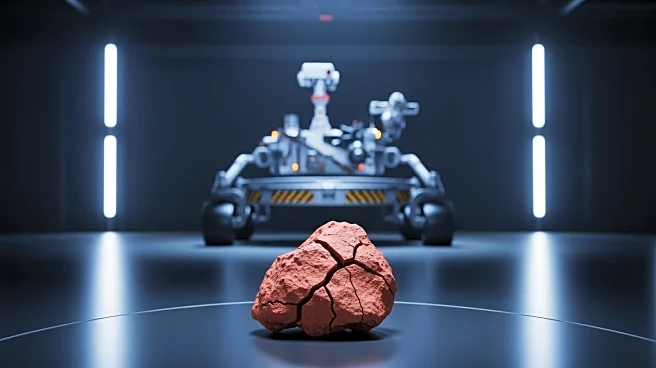
NASA's Mars Sample Return program, which aimed to bring back rock samples from Mars that could contain signs of ancient life, has been effectively cancelled. This decision follows the U.S. Senate's approval
of a spending bill that reverses previous budget cuts to NASA but does not reinstate funding for the Mars Sample Return program. The program was initially designed to retrieve samples collected by the Perseverance rover, which are believed to hold the clearest signs of life ever found on Mars. Despite the cancellation, the bill allocates $110 million to the Mars Future Missions program, supporting technologies developed under the Mars Sample Return initiative. This funding, however, falls short of the estimated $11 billion needed for the mission. The bill also provides $24.4 billion to NASA, with $7.25 billion for the Science Mission Directorate, and funds other projects like the Dragonfly mission to Titan and the James Webb Space Telescope.
Why It's Important?
The cancellation of the Mars Sample Return program represents a significant setback for NASA's efforts to explore Mars and search for signs of life. The decision leaves China as the primary nation pursuing Mars sample return, with its Tianwen-3 mission scheduled to launch in 2028. This shift could impact the U.S.'s leadership in space exploration and scientific research. The funding reallocation reflects a broader prioritization of other NASA projects, potentially affecting the agency's long-term strategic goals. The decision also highlights the challenges of balancing budget constraints with ambitious scientific endeavors, as well as the geopolitical implications of ceding ground in space exploration to other nations.
What's Next?
The funding bill awaits President Trump's signature to become law. If signed, NASA will need to reassess its Mars exploration strategy and potentially seek alternative methods or partnerships to achieve its scientific objectives. The agency may focus on leveraging the $110 million allocated for Mars Future Missions to develop technologies that could support future missions. Meanwhile, China's progress with its Tianwen-3 mission will be closely monitored, as it could redefine the competitive landscape of space exploration. NASA's ability to adapt to these changes will be crucial in maintaining its role in international space research.