



What's Happening?
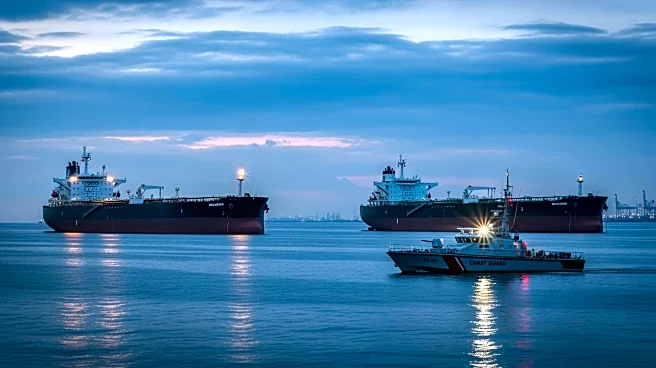
India has seized three oil tankers linked to Iran that were under U.S. sanctions, as part of efforts to curb illicit trade in its maritime zone. The vessels, identified as Stellar Ruby, Asphalt Star, and Al Jafzia, were intercepted about 100 nautical
miles west of Mumbai. These tankers frequently changed identities to evade law enforcement, according to a source with direct knowledge of the matter. The seizures come after improved U.S.-India relations, with the U.S. recently reducing import tariffs on Indian goods. The Indian Coast Guard has increased its surveillance efforts, deploying numerous ships and aircraft to monitor its maritime zones.
Why It's Important?
The seizure of these tankers highlights India's commitment to enforcing international sanctions and maintaining maritime security. This action could strengthen U.S.-India relations, as it aligns with U.S. efforts to enforce sanctions against Iran. The move also underscores India's strategic role in regional security and its ability to influence global oil trade dynamics. By preventing illicit oil transfers, India is contributing to the stability of international oil markets, which could have broader economic implications, including potential impacts on oil prices and trade routes.
What's Next?
India's actions may prompt further diplomatic discussions with the U.S. and Iran. The seized vessels are under investigation, and the outcome could affect future maritime security policies. Additionally, this incident may lead to increased scrutiny of maritime activities in the region, potentially influencing international shipping regulations. Stakeholders, including oil companies and maritime authorities, will likely monitor the situation closely to assess its impact on global oil supply chains.