





What's Happening?
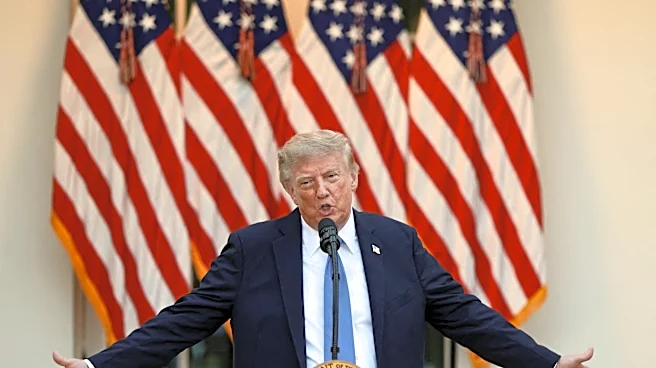
President Trump has posted on Truth Social, claiming to be making billions of dollars for the country, not himself, through stock market activities. This assertion was accompanied by a meme depicting him in the Oval Office, monitoring trading data across
multiple screens. His most recent financial disclosure for 2025 revealed personal gains of $2.2 billion, which has led to accusations from opponents of profiteering during his second term in office. The meme specifically showed him profiting from a rise in Intel's share price. Office of Government Ethics filings indicate that President Trump purchased Intel shares on several occasions earlier in 2026, despite the U.S. government acquiring a 10 percent stake in the company in August 2025. He engaged in approximately 3,600 stock trades in the first quarter of 2026 alone, totaling over $100 million. President Trump has previously stated that his growing personal fortune is managed by financial advisers through a 'blind account' and is not a result of deliberate efforts to capitalize on his position.
Why It's Important?
This development is significant as it raises questions about potential conflicts of interest and the ethical implications of a sitting president actively engaging in stock market trading, especially in companies where the U.S. government also holds a stake. The substantial personal financial gains reported by President Trump, coupled with his public statements, fuel ongoing debates about the separation of personal financial interests from presidential duties. Accusations of profiteering could erode public trust in government and its leaders, particularly given a recent Gallup poll indicating that 90 percent of Americans believe the U.S. government and its political leaders are corrupt. The situation highlights the challenges of maintaining transparency and avoiding the appearance of impropriety when high-ranking officials have significant personal wealth and investments. It also brings into focus the mechanisms, or lack thereof, for scrutinizing and regulating the financial activities of a president while in office.
What's Next?
The accusations of profiteering are likely to continue to be a point of contention for President Trump's political opponents, potentially influencing public discourse and future political campaigns. Further scrutiny of his financial disclosures and trading activities by watchdog groups and the media can be anticipated. There may be calls for stricter ethical guidelines or legislative measures regarding the financial dealings of presidents and other high-ranking government officials. The public's perception of government corruption, already high, could be further impacted by these ongoing discussions. President Trump may continue to defend his financial activities by emphasizing the overall growth of the stock market and attributing his gains to the efforts of his financial advisors, rather than any direct influence from his office.
Beyond the Headlines
Beyond the immediate political and financial implications, this situation touches upon deeper ethical and systemic issues concerning power, wealth, and public service. The concept of a 'blind account' for a president's investments is intended to prevent conflicts of interest, but the sheer scale of President Trump's reported gains and his public commentary on them challenge the effectiveness of such arrangements in maintaining public confidence. It also raises questions about the broader culture of financial transparency and accountability for elected officials. The public's increasing cynicism about political leaders' integrity, as indicated by the Gallup poll, suggests a growing demand for more robust ethical frameworks and oversight. This scenario could contribute to a re-evaluation of existing ethics laws and practices for presidential finances, potentially leading to reforms aimed at preventing even the appearance of personal enrichment through public office.