



What's Happening?
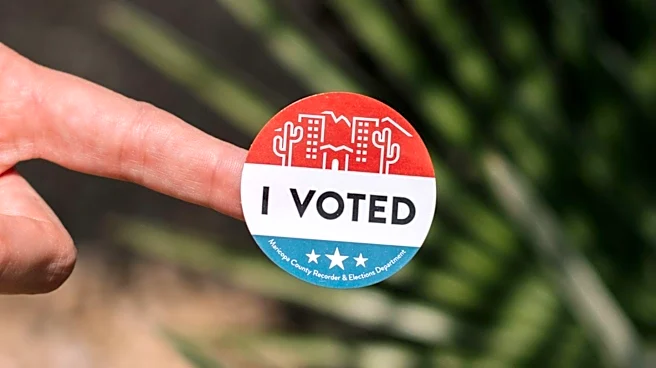
The Trump administration is reportedly engaged in various efforts to influence the 2026 midterm elections, including attempts to restrict mail-in voting and gain access to private voter data. Despite a Supreme Court ruling that rejected planned restrictions
on mail-in ballots, President Trump continues to pursue tactics such as purging voter rolls. Critics, including David Daley, senior fellow at FairVote, and Ari Berman, national voting rights correspondent for Mother Jones, warn that these actions are part of a broader strategy to undermine democratic processes. The administration has also pledged a $5,000 'dividend' to US adults if Republicans maintain power. Concerns have been raised about potential further interference, such as sending ICE to polling places, seizing ballots, or declaring a fake national emergency, according to reporting in Mother Jones.
Why It's Important?
These actions by the Trump administration are significant because they directly challenge the integrity and accessibility of the U.S. electoral system. Attempts to restrict mail-in voting, purge voter rolls, and access private voter data could disenfranchise a substantial number of eligible voters, particularly those in 'blue states' and demographics that rely on mail-in ballots. The Supreme Court's rejection of mail-in voting restrictions was a victory for voting rights advocates, but the ongoing efforts to influence elections raise concerns about the fairness and legitimacy of future outcomes. The promise of a 'dividend' also introduces a potential element of electoral inducement, which could sway voters and further politicize the election process. The broader implication is a potential erosion of public trust in democratic institutions and the perception of a free and fair election.
What's Next?
Democrats and voting rights advocates are responding to these perceived threats by urging voters to remain vigilant and ensure a high turnout to counter any attempts at election interference. The Supreme Court may still weigh in on other related cases, such as the administration's request to use Social Security data to verify voter rolls, which could impact voter eligibility. Election officials are preparing for potential disruptions, and there is a focus on ensuring that voters are not confused by the administration's past attempts to meddle with election procedures. Further legal challenges and public awareness campaigns are likely as stakeholders work to protect voting rights and the democratic process ahead of the 2026 midterms.
Beyond the Headlines
The ongoing efforts by the Trump administration to influence elections extend beyond immediate policy changes, touching upon deeper ethical and societal implications. The rhetoric surrounding 'authoritarian purges' and 'rigging elections' can sow distrust in the democratic system itself, regardless of the legal outcomes of specific challenges. The focus on voter data and purges raises privacy concerns and the potential for misuse of personal information. Furthermore, the administration's actions could set precedents for future administrations, potentially normalizing executive interference in electoral processes. This situation highlights a critical juncture for American democracy, where the balance between executive power and the constitutional right to vote is being tested, potentially leading to long-term shifts in how elections are conducted and perceived.