






What's Happening?
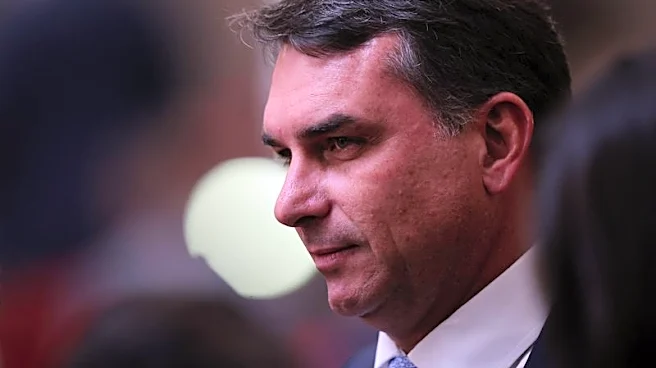
Brazil's President Luiz Inácio Lula da Silva and Senator Flávio Bolsonaro are at odds over a U.S. proposal to impose a 25% tariff on Brazilian products. This proposal comes despite a significant U.S. trade surplus with Brazil. The Trump administration
had previously imposed a 50% tariff on Brazilian imports, citing unfair trade practices and a 'witch hunt' against former President Jair Bolsonaro. The tariffs have become a contentious issue in Brazil's upcoming presidential election, with both candidates using the situation to bolster their political positions. Lula has criticized the tariffs as an infringement on Brazil's sovereignty, while Bolsonaro argues that the tariffs could politically benefit Lula by strengthening his electoral position.
Why It's Important?
The proposed U.S. tariffs on Brazilian goods could have significant economic and political implications. Economically, the tariffs may affect trade relations between the U.S. and Brazil, potentially impacting industries reliant on Brazilian imports. Politically, the tariffs are influencing Brazil's presidential election, with candidates using the issue to sway public opinion. Lula's stance against the tariffs may resonate with voters concerned about national sovereignty, while Bolsonaro's focus on the potential political gains for Lula highlights the strategic use of international trade issues in domestic politics. The outcome of this dispute could affect future U.S.-Brazil relations and trade policies.
What's Next?
As the Brazilian presidential election approaches, both Lula and Bolsonaro are likely to continue leveraging the tariff issue to gain voter support. Flávio Bolsonaro plans to visit the U.S. to advocate against the tariffs, while Lula is expected to maintain his defense of Brazil's trade policies. The U.S. Trade Representative's ongoing investigation into Brazil's trade practices may also influence future developments. The resolution of this tariff dispute could set a precedent for how Brazil navigates international trade challenges and its relationship with the U.S.