





What's Happening?
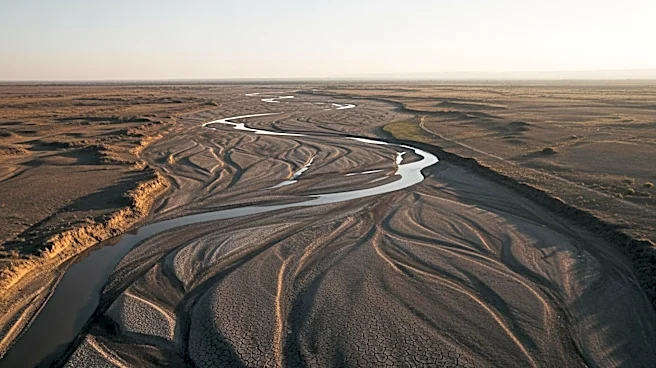
Recent studies have highlighted severe streamflow droughts in the Fraser and upper Columbia Basins in western Canada, driven by a combination of high temperatures and low snowpack. The 2023 drought was primarily caused by unusually warm temperatures in May
and June, which accelerated snowmelt and reduced streamflow. In 2024, the drought was exacerbated by a low winter snowpack, leading to significant streamflow deficits. These events underscore the complex interplay between meteorological and snow droughts, which are expected to become more frequent and severe due to climate change. The study emphasizes the need for understanding the multivariate drivers of droughts to better predict and manage future water shortages in snow-dominated regions.
Why It's Important?
The findings are crucial for regions dependent on snowmelt for water supply, as they highlight the increasing vulnerability to droughts under changing climate conditions. The study's insights into the interactions between snow and meteorological droughts provide valuable information for water resource management and planning. As climate change continues to alter precipitation patterns and increase temperatures, regions like the Fraser and upper Columbia Basins may face more frequent and severe droughts, impacting water availability for agriculture, industry, and communities. This research underscores the importance of developing adaptive strategies to mitigate the impacts of climate change on water resources.
What's Next?
Future projections suggest that both snow and streamflow droughts will become more frequent and severe as global temperatures rise. The study indicates that a 3.0°C increase in global temperatures could be a threshold for dominant drought occurrence, with significant implications for water management policies. Policymakers and water resource managers will need to consider these projections in their planning to ensure sustainable water supply and mitigate the impacts of future droughts. Continued research and monitoring of hydroclimatic conditions will be essential to improve drought prediction and response strategies.