



What's Happening?
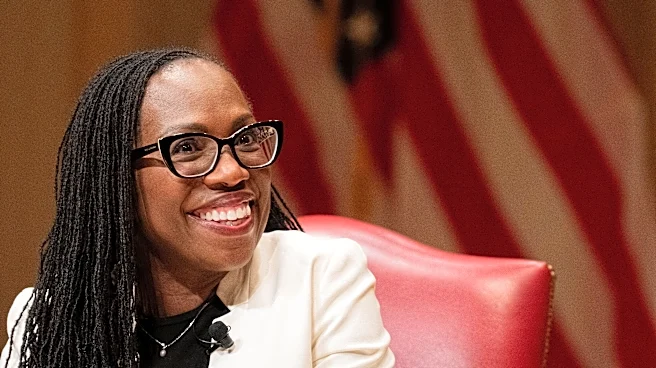
Justice Ketanji Brown Jackson publicly criticized the Supreme Court's handling of its emergency docket, often referred to as the 'shadow docket.' In a speech at the University of the District of Columbia's law school, Justice Jackson expressed 'serious
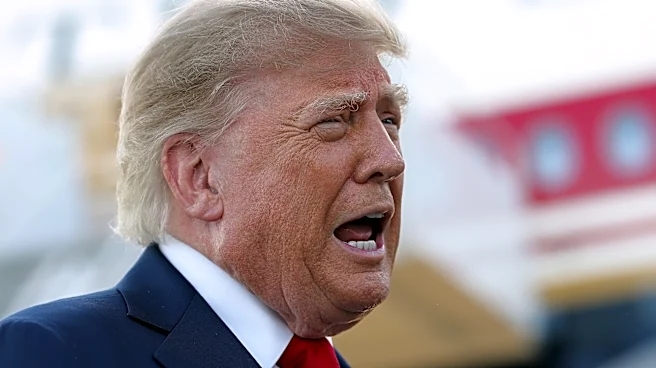
concern' that the court's willingness to fast-track high-profile cases without full hearings is undermining public faith in the judicial system. She highlighted that unlike the routine merits docket, where cases undergo extensive written briefs and oral arguments over months, emergency docket cases are often decided quickly and without comprehensive deliberation. Justice Jackson noted that the Trump administration frequently utilized this avenue, submitting approximately 30 applications for emergency action in President Trump's first year alone, many of which were granted, allowing policies to be implemented temporarily while their legality was still being reviewed by lower courts. She argued that this 'new approach' often bypasses lower courts' authority and lacks acknowledgment of the harms that can result from such rapid decisions. While acknowledging some recent improvements in providing reasoning for emergency decisions, she emphasized that these explanations are still not as thorough as those for cases on the regular docket.
Why It's Important?
Justice Jackson's critique is significant because it comes from a sitting Supreme Court Justice, making her one of the most vocal public critics of the court's practices, particularly regarding the emergency docket. This 'shadow docket' has been a point of contention, with critics arguing it allows the court to make consequential decisions with minimal transparency and public scrutiny. Her remarks underscore a growing concern about the court's procedural integrity and its impact on the perception of justice. The practice of fast-tracking cases, especially those involving significant policy changes, can bypass the traditional judicial process, potentially leading to less thoroughly vetted rulings and creating an impression of unequal access to justice. If the public perceives that certain litigants can get a 'fast pass' to the Supreme Court, it could erode trust in the judiciary's impartiality and fairness. This issue affects the balance of power within the federal court system, as the Supreme Court's frequent intervention in cases before lower courts have fully adjudicated them can diminish the authority and role of those lower judicial bodies.
What's Next?
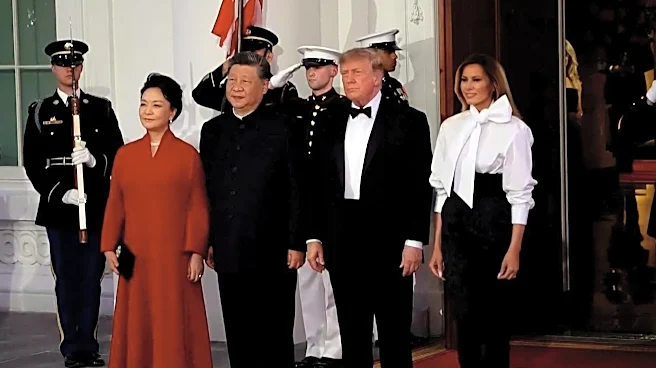
Justice Jackson urged the Supreme Court to re-evaluate and reimagine its approach to the emergency docket, suggesting the development of a better system for deciding which emergency requests to take up and when. Her call for reform indicates a potential internal push for greater transparency and more rigorous procedures in handling these urgent cases. While her conservative colleagues, including Chief Justice John Roberts, Justice Amy Coney Barrett, and Justice Brett M. Kavanaugh, were attending a White House state dinner, her speech highlights a clear division within the court regarding these practices. Future developments may include further public discourse on the 'shadow docket,' potentially leading to internal discussions among the justices about procedural changes. The ongoing debate could also influence how future emergency applications are handled, with increased pressure for more detailed explanations and a more cautious approach to intervening in cases before lower courts have rendered their full decisions. The legal community and civil society groups will likely continue to monitor the court's emergency rulings closely, advocating for greater accountability and adherence to traditional judicial processes.
Beyond the Headlines
The deeper implications of Justice Jackson's criticism extend to the fundamental principles of judicial review and the separation of powers. The 'shadow docket' raises questions about due process and the right to a full and fair hearing, as decisions made with 'truncated procedures' may not fully consider all legal arguments and potential consequences. Ethically, the practice challenges the court's commitment to transparency and its role as a neutral arbiter, especially when it appears to favor certain litigants or political agendas. Culturally, the public's perception of the Supreme Court as an impartial institution is at stake; if the court is seen as consistently 'greenlighting harmful acts' without clear explanation, it risks alienating segments of the population and fostering cynicism towards the rule of law. This development could also trigger long-term shifts in how legal challenges are strategized, with litigants potentially seeking to bypass lower courts more frequently if the emergency docket remains a viable 'end run' around standard review processes. The debate over the shadow docket is not just about procedure; it's about the very legitimacy and public trust in the highest court in the U.S.