





What's Happening?
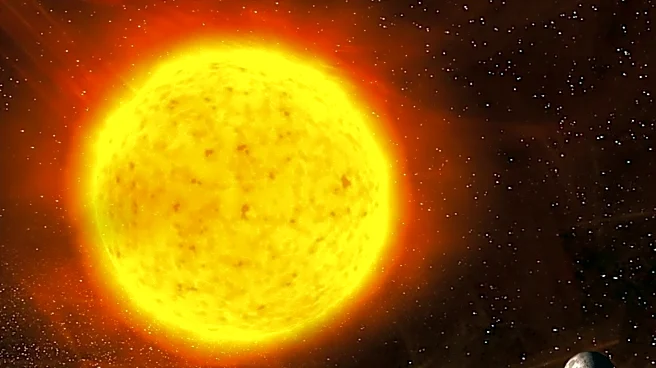
A recent study published in the journal JGR Atmospheres has projected that life on Earth could persist for approximately 1.8 billion more years, despite the Sun's increasing luminosity. As the Sun, a G-type main-sequence yellow dwarf, continues to burn
hydrogen, its luminosity increases by about 1% every 110 million years. This gradual brightening poses a significant threat to Earth's biosphere. The study suggests that Earth's long-term carbon cycle might mitigate some effects by drawing carbon dioxide from the atmosphere into carbonate rocks, thus reducing the greenhouse effect. However, the reduction in atmospheric CO2 could eventually doom macro-sized organisms, including plants that rely on photosynthesis. The study utilized 29 climate models to explore various scenarios affecting Earth's vegetative biosphere, focusing on carbon dioxide levels and temperature. The findings indicate that plants using crassulacean acid metabolism (CAM) photosynthesis could survive until about 1.87 billion years from now, depending on the scenario.
Why It's Important?
The study's findings highlight the long-term challenges posed by the Sun's increasing luminosity, which could significantly impact Earth's climate and biosphere. Understanding these changes is crucial for predicting the future of life on Earth and preparing for potential environmental shifts. The research underscores the importance of studying Earth's carbon cycle and its role in regulating atmospheric conditions. It also emphasizes the need for further exploration of how photosynthesis might evolve to adapt to changing environmental conditions. The study's insights could inform future research on climate change and the sustainability of life on Earth, providing a framework for understanding the planet's long-term ecological dynamics.