




What's Happening?
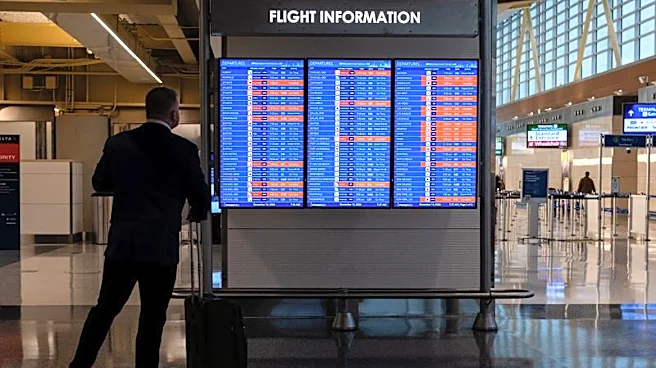
L3Harris Technologies, a U.S.-based aerospace and defense contractor with a market value of approximately $50.7 billion, is facing scrutiny following a nationwide FAA system outage. The disruption, which led to widespread flight delays and cancellations,
has been linked to a router software upgrade supplied by L3Harris. The incident forced air traffic control centers across the country to revert to manual procedures. L3Harris specializes in building mission-critical communications and networking systems for government and commercial aviation clients. This event has brought the company's role in critical infrastructure into sharp focus, particularly as U.S. transportation officials and lawmakers advocate for extensive modernization of FAA network and air traffic infrastructure. The timing of the outage is notable, as it occurred shortly after L3Harris issued $1.0 billion in notes, primarily intended to refinance $1.8 billion in bonds maturing in 2026 and 2027, ensuring near-term liquidity.
Why It's Important?
The FAA router incident highlights the critical reliance of national infrastructure on private contractors like L3Harris Technologies. The disruption underscores vulnerabilities within the U.S. air traffic control system and could accelerate policy discussions regarding long-term funding for aviation system upgrades and the roles of contractors in maintaining these essential services. For L3Harris, the incident places its secure communications and networking segment under intense scrutiny. While the company's broader narrative often emphasizes missiles and space, the FAA modernization push directly impacts its mission-critical communications business. The outcome of these policy discussions could either bolster demand for resilient air traffic systems, benefiting L3Harris, or, if blame is heavily assigned, potentially risk future contract decisions, impacting its market position and investor confidence.
What's Next?
Following the FAA router incident, U.S. transportation officials and lawmakers are expected to intensify their push for comprehensive modernization of the FAA's network and air traffic infrastructure. This will likely lead to increased policy debates concerning funding allocations for critical aviation systems and a re-evaluation of contractor roles and responsibilities. For L3Harris Technologies, the immediate future will involve navigating this heightened scrutiny. The company's ability to demonstrate reliability and contribute to solutions for infrastructure resilience will be crucial. Investors will be closely watching how these policy discussions evolve and whether any blame attributed to the outage impacts L3Harris's ability to secure future government contracts, particularly in the mission-critical communications sector. The incident may also prompt a broader review of procurement processes for essential national infrastructure components.
Beyond the Headlines
The FAA router outage linked to L3Harris Technologies extends beyond immediate flight disruptions, touching upon deeper implications for national security and technological resilience. The incident exposes the intricate interdependencies within critical infrastructure and the potential for a single point of failure to cascade into widespread systemic issues. Ethically, it raises questions about accountability in public-private partnerships managing essential services and the balance between cost-efficiency and robust redundancy. Legally, future contracts for defense and aerospace contractors involved in critical infrastructure may include more stringent performance clauses and liability frameworks. Culturally, such events can erode public trust in technological systems and government oversight, potentially fueling demands for greater transparency and more rigorous testing protocols for vital national systems. This incident could also trigger a long-term shift towards prioritizing resilience and cybersecurity in all federal infrastructure projects, influencing procurement strategies and technological development across the defense and aerospace sectors.