





What's Happening?
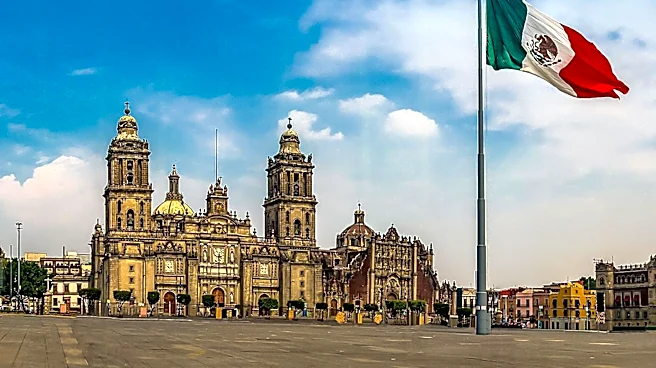
The Mexican government, under President Claudia Sheinbaum, has unveiled its Hydrocarbon Sector Development Plan for 2025-2039, signaling a notable departure from the energy policies of her predecessor, former President Andrés Manuel López Obrador. The new
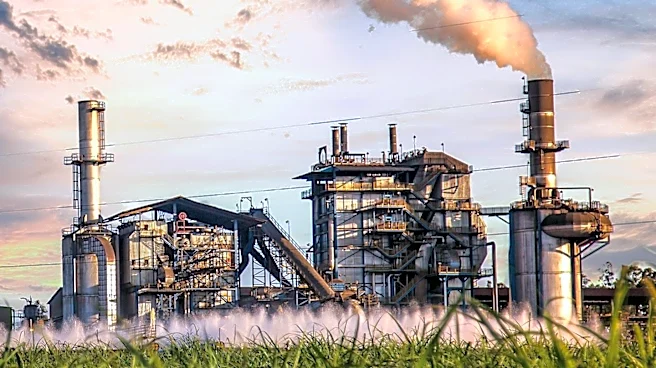
plan introduces proposals previously considered anathema, such as a conservative oil production target and an acknowledgment of the potential for gas extraction from unconventional reservoirs, which would necessitate hydraulic fracturing (fracking). It also formalizes the opening for Pemex, the state-owned oil company, to partner with private companies. This contrasts sharply with López Obrador's approach, which canceled oil rounds and emphasized strengthening Pemex's autonomy. The new plan aims to maintain oil production at a minimum of 1.6 million barrels per day until 2039, a slight increase from current levels but a significant reduction from López Obrador's goal of 2.4 million barrels. For natural gas, the plan targets a production peak of 6.6 billion cubic feet per day by 2038, nearly double the 2025 output, primarily from conventional fields.
Why It's Important?
This shift in Mexico's hydrocarbon policy under President Sheinbaum has significant implications for the U.S. energy sector and climate goals. The increased openness to private partnerships for Pemex could create new opportunities for U.S. energy companies, potentially boosting cross-border investment and collaboration in oil and gas exploration and production. The acknowledgment of fracking for unconventional gas reservoirs, despite environmental concerns, could enhance North American energy security by increasing natural gas supply. However, this move also presents a challenge to U.S. climate objectives, as it signals a continued reliance on fossil fuels rather than a rapid transition to renewable energy. The U.S. has been advocating for cleaner energy sources, and Mexico's updated plan, while incorporating some sustainable projects, still heavily emphasizes hydrocarbons. This could lead to diplomatic discussions and potential friction regarding climate commitments and energy transition strategies between the two nations.
What's Next?
The implementation of the new Hydrocarbon Sector Development Plan will involve detailed legislation and secondary regulations. The plan's success will depend on its ability to attract private investment and effectively manage the environmental impacts of increased hydrocarbon extraction, particularly fracking. The U.S. government and environmental organizations will likely monitor these developments closely, potentially offering technical assistance or expressing concerns regarding environmental standards. The plan's emphasis on natural gas as a transition fuel could lead to increased demand for U.S. natural gas exports or joint infrastructure projects. However, the long-term commitment to fossil fuels could also strain U.S.-Mexico relations on climate policy, especially as the U.S. pushes for more aggressive decarbonization efforts. The Sheinbaum administration will need to balance economic development with environmental sustainability, a challenge that will be watched by international stakeholders.
Beyond the Headlines
The policy shift reflects a pragmatic approach by the Sheinbaum administration to address Mexico's energy needs and economic realities, potentially prioritizing energy independence and revenue generation over strict adherence to previous environmental stances. This move highlights the complex trade-offs many nations face between economic development, energy security, and climate action. The re-evaluation of fracking, a controversial technology, underscores the persistent demand for fossil fuels and the challenges of transitioning to renewables, especially for countries with significant hydrocarbon reserves. Ethically, it raises questions about the environmental legacy for future generations and the balance between short-term economic gains and long-term ecological sustainability. For the U.S., this signals a need for a nuanced diplomatic strategy that acknowledges Mexico's sovereign energy decisions while continuing to advocate for shared climate goals and sustainable development practices across North America.