



What's Happening?
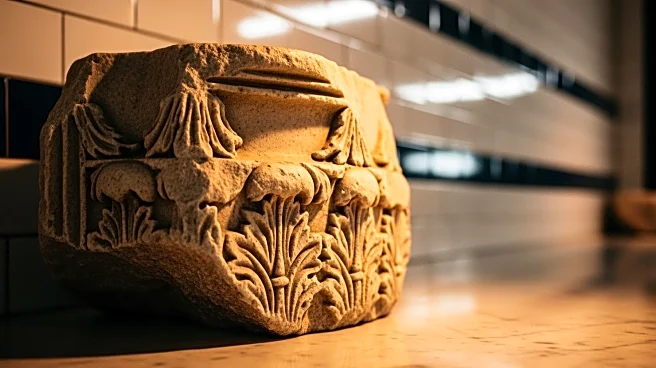
Rome has inaugurated two new subway stations, including one beneath the Colosseum, integrating modern transport with ancient artifacts. The Colosseo station showcases ceramic vases, stone wells, and ruins from a first-century dwelling, offering a museum-like
experience. The Metro C line, under construction for two decades, faced delays due to archaeological excavations. The project, costing around 7 billion euros, aims to connect key historical sites while preserving archaeological finds. The new stations are part of a broader effort to enhance Rome's public transport while respecting its rich historical heritage.
Why It's Important?
The opening of the Colosseo subway station is a significant development for Rome's public transportation system, providing a modern solution to the city's notorious traffic congestion. By integrating archaeological displays, the station not only serves commuters but also enhances the cultural experience for tourists. This project underscores the challenges and opportunities of urban development in historically rich areas, balancing modern infrastructure needs with the preservation of cultural heritage. The successful completion of this phase may serve as a model for similar projects in other ancient cities.
What's Next?
As the Metro C line continues to expand, future stations will likely face similar challenges of integrating modern infrastructure with archaeological preservation. The next phase includes extending the line to Piazza Venezia, with completion expected by 2035. Ongoing construction will require careful planning to avoid disrupting Rome's historical sites. The city may also explore additional measures to enhance public transport efficiency and accessibility, further reducing surface traffic and improving the overall urban experience for residents and visitors.