


What's Happening?
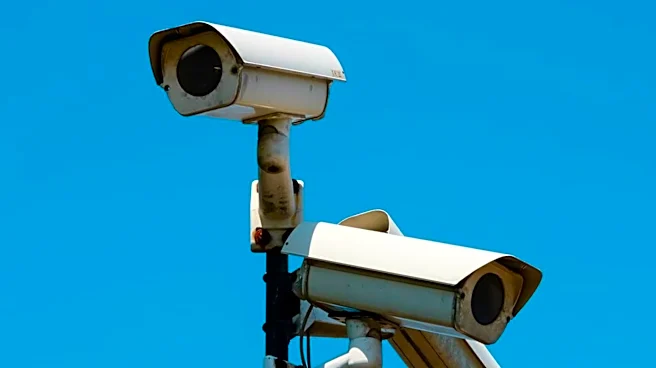
The Texas Public Policy Foundation (TPPF) has identified a significant increase in distrust between government and citizens, as well as among individuals, as a primary driver for the growing demand for surveillance technologies like Flock cameras. The article
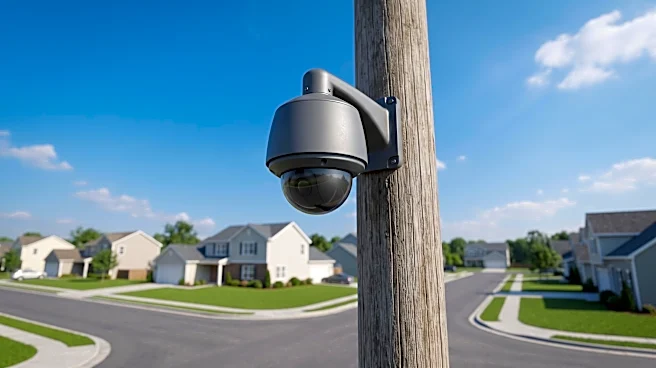
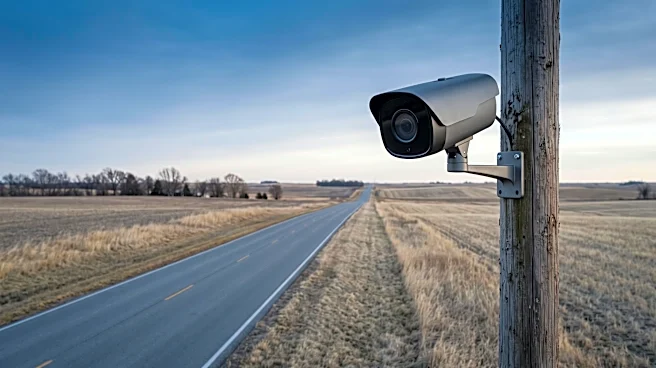
notes that while people are increasingly aware of constant monitoring through smartwatches, streaming services, and doorbell cameras, the specific uses of their personal information often remain unclear. This lack of transparency, combined with record-low trust in government and a decline in social trust (from 77% in pre-1960s America to 35% now believing most people can be trusted), creates a societal double-bind. The TPPF suggests that in a society where trust is diminished, there is a natural inclination to demand more surveillance, whether from state entities or private solutions like Flock cameras. This trend is sparking widespread opposition, with groups like the ACLU actively campaigning against Automated License Plate Recognition (ALPR) systems, leading to incidents of vandalism and political debate at local and national levels.
Why It's Important?
The TPPF's analysis highlights a critical societal shift in the U.S. where declining trust is directly correlating with an increased reliance on surveillance. This dynamic has profound implications for civil liberties, public policy, and the social fabric. The proliferation of ALPR systems, such as those from Flock Safety, represents a significant expansion of surveillance capabilities, raising concerns about privacy and the potential for misuse by law enforcement and other agencies. The debate surrounding these technologies, which has engaged both Democrats and Republicans in Congress, underscores the bipartisan concern over an expanding surveillance state. The 'Flock-Off Act,' introduced by Representatives Thomas Massie (R-Ky.) and Eric Burlison (R-Mo.) with co-sponsor Representative Ro Khanna (D-Calif.), aims to ban federal funding for these cameras, indicating a legislative effort to address these concerns. This situation forces a re-evaluation of the social contract, balancing the desire for safety with fundamental rights to privacy and autonomy, and questions whether technology is eroding the foundational trust necessary for a healthy democratic society.
What's Next?
The ongoing debate surrounding surveillance technologies like Flock cameras is expected to intensify, particularly as trust in government and social institutions continues to decline. Legislative efforts, such as the 'Flock-Off Act,' signal a growing push for federal and state-level regulations to impose guardrails on these technologies and protect privacy. Local communities and political candidates will likely continue to grapple with decisions regarding the adoption or rejection of surveillance systems, reflecting the tension between public safety concerns and civil liberties. The Texas Public Policy Foundation's perspective suggests that addressing the root cause of distrust is crucial for mitigating the demand for pervasive surveillance. This could lead to increased advocacy for government transparency, accountability, and community-building initiatives aimed at rebuilding social trust. The future will likely see continued legal challenges, public protests, and policy debates as society attempts to navigate the complex interplay between technological advancements, security needs, and fundamental rights in an environment of diminishing trust.
Beyond the Headlines
The TPPF's insights into the link between distrust and surveillance reveal a deeper societal challenge: the erosion of the social contract itself. When citizens no longer trust their government or neighbors, the default response becomes a demand for external controls, leading to a surveillance-driven society. This shift can have long-term consequences for democratic participation and individual freedom. A society under constant watch, even if self-imposed through private cameras, may foster a climate of suspicion and reduce spontaneous social interactions, impacting community cohesion. Furthermore, the reliance on technology to compensate for a lack of trust can create a feedback loop where surveillance itself further diminishes trust, as individuals feel constantly scrutinized. This raises fundamental questions about the kind of society Americans are building: one based on mutual trust and shared responsibility, or one governed by omnipresent digital eyes. The ethical implications extend to how data collected by these systems is used, who has access to it, and the potential for algorithmic bias to perpetuate or exacerbate social inequalities, fundamentally reshaping the balance between security and liberty.