






What's Happening?
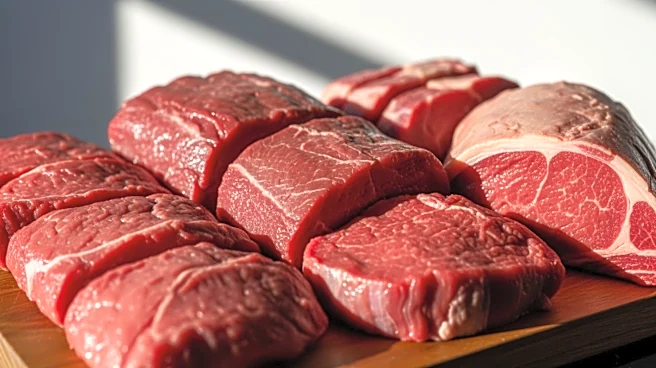
China is set to impose a 55% tariff on Australian beef imports as the country has exceeded its export quota of 205,000 tonnes for the year. This move is part of China's strategy to protect its local farmers by limiting imports. The quota, which is about
one-third lower than the previous year's total imports, was quickly approached by Australia, with 90% of the quota already reached. The tariff is expected to significantly impact Australian beef exports to China, which have been popular in Chinese restaurants and high-end supermarkets. This development comes as the United States plans to impose a 12.5% tariff on Australian imports, citing Australia's failure to prevent the importation of goods made with forced labor.
Why It's Important?
The imposition of a 55% tariff on Australian beef by China is significant as it highlights the ongoing trade tensions and protectionist measures being adopted by major economies. For Australia, this tariff could lead to a substantial decrease in beef exports to China, affecting Australian farmers and the agricultural sector. The U.S. decision to impose tariffs on countries failing to prevent forced labor imports, including Australia, further complicates international trade relations. These actions could lead to increased costs for consumers and businesses, potentially affecting global supply chains and economic stability.
What's Next?
Australia may seek to negotiate with China to remove or increase the quota, although previous lobbying efforts have been unsuccessful. The U.S. tariffs on forced labor imports could prompt affected countries to strengthen their labor practices to avoid additional tariffs. The international community may see increased trade negotiations and potential retaliatory measures as countries respond to these tariffs. The situation could also lead to a reevaluation of trade policies and alliances, particularly in the context of U.S.-China relations.