






What's Happening?
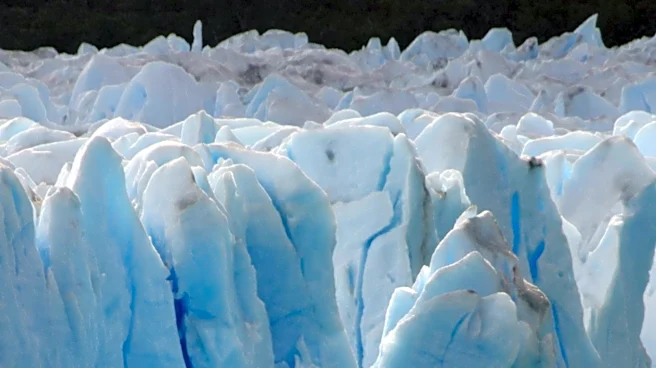
Blood Falls in Antarctica, known for its striking red hue, has been the subject of scientific study for over a century. Recent research has uncovered that the falls are fed by iron-rich brine trapped beneath the Taylor Glacier for over 1.5 million years.
This brine, which remains liquid due to its high salinity, supports a unique microbial ecosystem that has survived without sunlight or oxygen. The study of Blood Falls provides insights into extreme environments on Earth and potential analogs for extraterrestrial life. The latest research has also observed the glacier's surface changes as the brine escapes, offering clues about the glacier's dynamics.
Why It's Important?
The discovery of a thriving microbial ecosystem in such an extreme environment expands our understanding of life's adaptability and resilience. This research has implications for astrobiology, as it suggests that life could exist in similar conditions on other planets or moons. Additionally, the study of Blood Falls contributes to our knowledge of glacial dynamics and climate change, as monitoring these outflow events could serve as an early-warning system for changes within the glacier. The findings underscore the importance of interdisciplinary research in uncovering the complexities of Earth's ecosystems and their potential parallels in the universe.