





What's Happening?
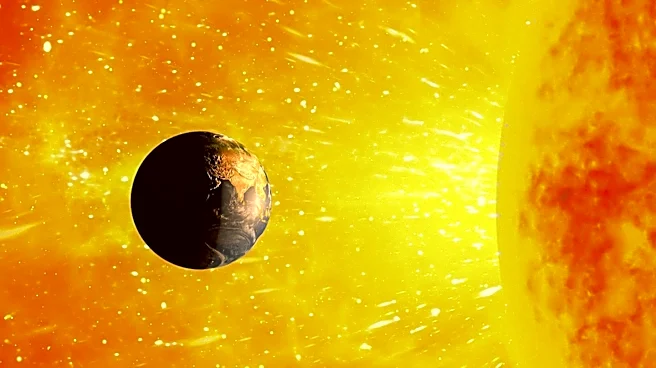
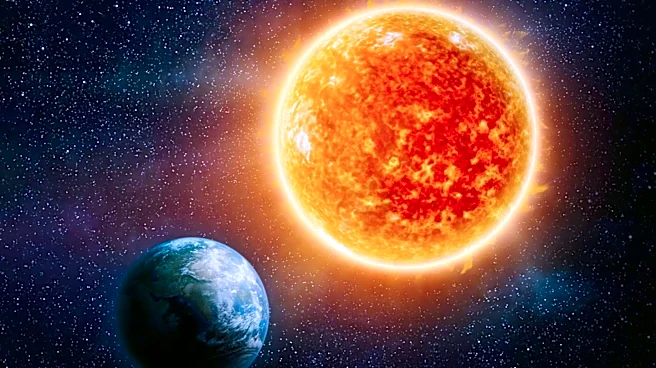
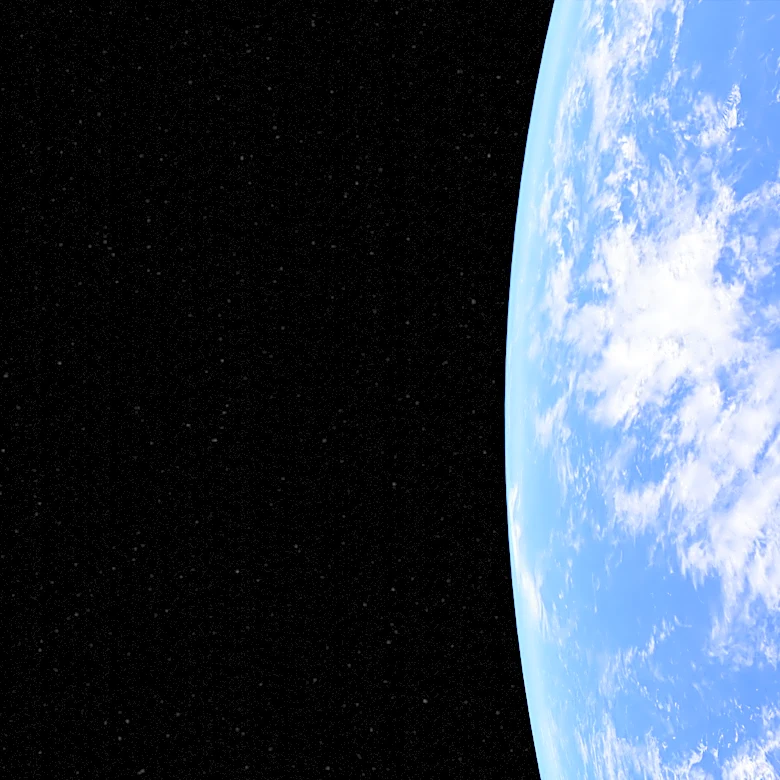
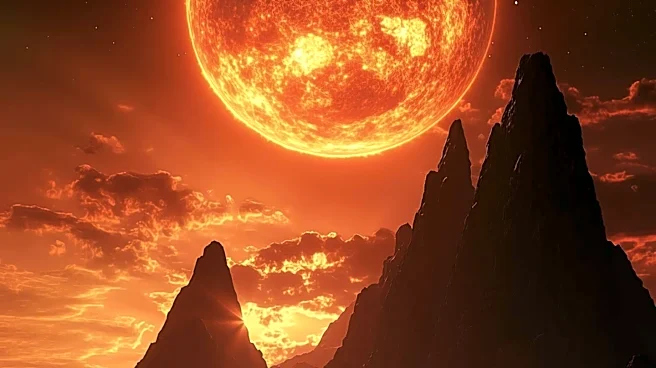
A new study published in Astronomy and Astrophysics suggests that Earth might avoid being engulfed by the sun when it expands into a red giant in about five billion years. The study explores two scenarios: Earth could either be pulled into the sun due
to gravitational forces or drift into a wider orbit if the sun loses enough mass. This mass loss occurs during the Asymptotic Giant Branch (AGB) phase, where the sun will shed its outer layers. The study used observations of a similar star, L2 Pup, to model these outcomes. Despite the potential for Earth to survive, the planet will become uninhabitable long before this due to the sun's increasing heat.
Why It's Important?
This research provides a new perspective on the long-term fate of Earth and the solar system. While the possibility of Earth surviving the sun's expansion is intriguing, it underscores the inevitability of significant changes to the planet's environment, which will render it uninhabitable. This study highlights the importance of understanding stellar evolution and its impact on planetary systems. It also emphasizes the need for humanity to consider long-term survival strategies, potentially beyond Earth, as the sun's lifecycle progresses.
Beyond the Headlines
The study raises questions about the future of human civilization and the potential need for interstellar exploration or colonization. It also prompts ethical considerations about the preservation of Earth's biosphere and the legacy of human impact on the planet. As scientific understanding of stellar and planetary evolution advances, these discussions will become increasingly relevant to future generations.