
What's Happening?
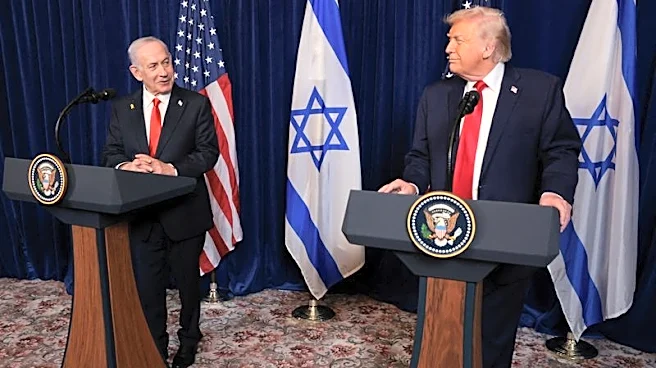
President Trump has made a controversial statement claiming that without his intervention, Israel would not exist. This assertion came during a heated phone call with Israeli Prime Minister Benjamin Netanyahu,
where Trump reportedly called Netanyahu 'f***ing crazy' over regional strategy. Trump confirmed the call in an interview, stating he was keeping Netanyahu out of jail and declaring his pivotal role in Israel's existence. This statement has been met with criticism, as it undermines Israel's historical struggles and achievements. Trump's administration has been known for its strong support of Israel, including recognizing Jerusalem as its capital and moving the U.S. Embassy there. However, his recent comments have sparked debate over the nature of U.S.-Israel relations and the implications of such personal claims of influence.
Why It's Important?
The statement by President Trump has significant implications for U.S.-Israel relations and the perception of American influence in the region. By claiming personal responsibility for Israel's survival, Trump risks alienating Israeli leaders and citizens who view their nation's existence as a result of their own historical and military efforts. This could strain diplomatic relations and affect future cooperation between the two countries. Additionally, the assertion challenges the traditional view of U.S. support as a partnership rather than a dependency, potentially impacting how other nations perceive American foreign policy. The controversy also highlights the delicate balance of power and influence in international relations, where personal claims can overshadow collective achievements and historical realities.
What's Next?
The fallout from Trump's statement may lead to diplomatic discussions between U.S. and Israeli officials to reaffirm the nature of their alliance. Israeli leaders may seek to publicly assert their nation's independence and historical achievements to counter the narrative of dependency. Additionally, this incident could influence future U.S. foreign policy decisions, as other nations observe the implications of personal claims of influence on international relations. The situation may also prompt discussions within the U.S. about the role of personal diplomacy in shaping foreign policy and the potential risks of such approaches.
Beyond the Headlines
Trump's statement raises questions about the ethical implications of personalizing international relations and the potential consequences for global diplomacy. It highlights the tension between individual leadership styles and the collective nature of international alliances. The incident also underscores the importance of historical context in understanding current geopolitical dynamics, as well as the need for leaders to balance personal influence with respect for the sovereignty and achievements of other nations.