




What's Happening?
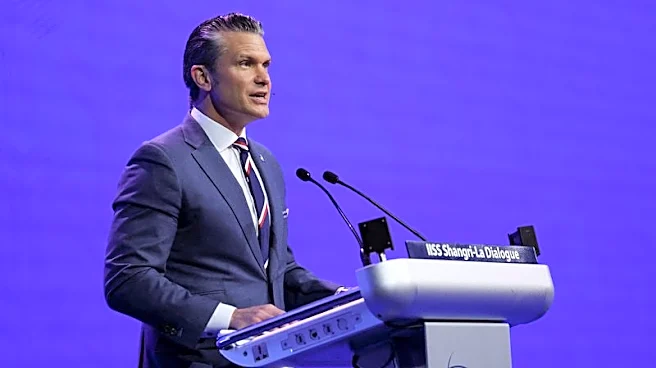
U.S. Defense Secretary Pete Hegseth has called on Asian allies to increase their military spending in response to China's growing military capabilities. Speaking at the Shangri-La Dialogue in Singapore, Hegseth emphasized the need for a stronger, self-reliant
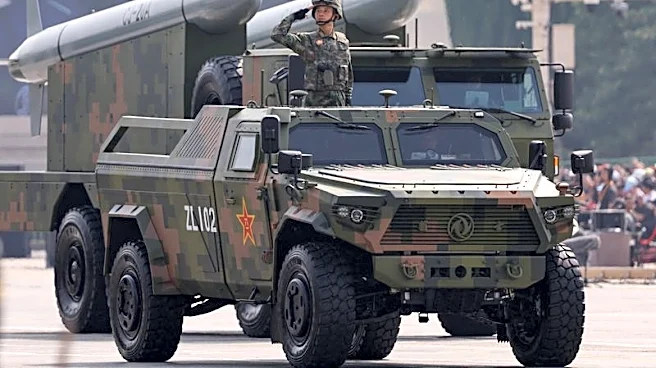
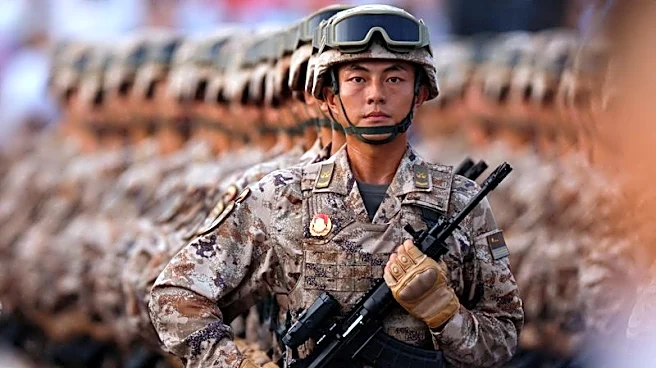
network of allies to deter aggression and maintain regional balance. He highlighted the 'rightful alarm' over China's rapid military buildup and expansion of activities in the region. Hegseth reiterated President Trump's demand for allies to shoulder more defense costs, stating that the era of the U.S. subsidizing defense for wealthy nations is over. He praised contributions from countries like South Korea, Japan, and Australia, while urging further investment in defense capabilities.
Why It's Important?
The call for increased defense spending is significant as it reflects the U.S.'s strategic shift in response to China's growing influence in the Asia-Pacific region. By urging allies to invest more in their defense, the U.S. aims to prevent any single nation from dominating the region, which could destabilize the balance of power. This move could lead to increased military collaboration and spending among U.S. allies, potentially boosting defense industries and altering geopolitical dynamics. The emphasis on shared defense responsibilities also aligns with President Trump's broader foreign policy approach, which seeks to reduce U.S. financial burdens while strengthening alliances.
What's Next?
The U.S. is likely to continue diplomatic efforts to encourage allies to increase their defense budgets. This could involve negotiations and agreements to enhance military capabilities and cooperation. Additionally, the U.S. may engage in further military-to-military communications with China to manage tensions and maintain open channels. The situation could lead to increased defense spending across the Asia-Pacific region, impacting regional security dynamics and potentially leading to new defense contracts and collaborations.