







What's Happening?
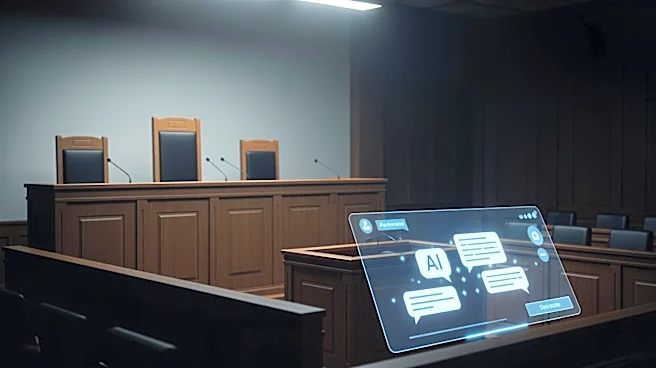
A recent ruling by a federal judge has determined that conversations with AI chatbots, such as ChatGPT and Claude, are not protected by attorney-client privilege. This decision has significant implications for users who rely on these platforms for legal
advice. Attorneys are now advising their clients to exercise caution when using AI chatbots for legal matters, emphasizing that these tools should be treated as informational resources rather than legal advisors. The ruling came to light in cases involving Bradley Heppner, former chair of GWG Holdings, and Changhan Kim, CEO of Korean video game publisher Krafton. In Heppner's case, documents prepared using Claude were requested by the court, as they were not protected by privilege. Similarly, Kim's chats with ChatGPT were reproduced in court, revealing plans to renege on promises made to a company Krafton acquired.
Why It's Important?
The ruling underscores the importance of understanding the limitations of privacy when using AI chatbots for sensitive matters. Users may inadvertently expose themselves to legal risks if they assume their conversations are confidential. This development could impact how individuals and businesses approach the use of AI for legal advice, potentially leading to increased scrutiny and caution. Legal professionals may need to adapt their practices to account for the accessibility of AI-generated content in legal proceedings. The decision also highlights the evolving nature of privacy and privilege in the digital age, prompting discussions about the need for updated legal frameworks to address these challenges.
What's Next?
As the legal landscape continues to adapt to technological advancements, further rulings and guidelines may emerge to clarify the extent of privacy protections for AI-generated content. Legal professionals and AI developers might collaborate to establish best practices for using AI in legal contexts, ensuring users are aware of the potential risks. Additionally, companies like OpenAI and Anthropic may face increased pressure to implement stronger privacy measures or provide clearer disclosures about data retention and accessibility. Stakeholders in the legal and tech industries will likely monitor these developments closely, influencing future policies and practices.
Beyond the Headlines
The ruling raises ethical questions about the use of AI in legal contexts, particularly regarding the balance between innovation and privacy. As AI becomes more integrated into everyday life, the potential for misuse or unintended consequences grows. This situation may prompt broader discussions about the ethical responsibilities of AI developers and users, as well as the need for comprehensive regulations to protect individuals' rights. The case also highlights the cultural shift towards reliance on technology for complex tasks, challenging traditional notions of privacy and confidentiality.