
What's Happening?
The Gaza Strip is currently grappling with the aftermath of severe flooding caused by recent storms. These storms have submerged displacement camps and cities already devastated by war, leading to widespread
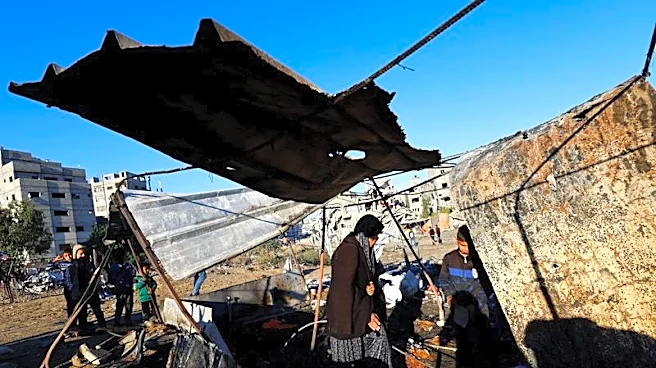
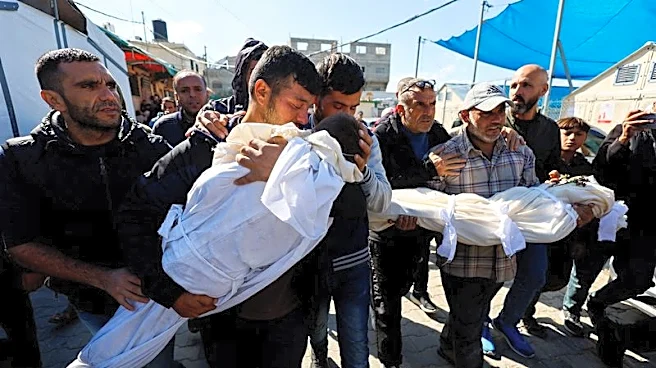
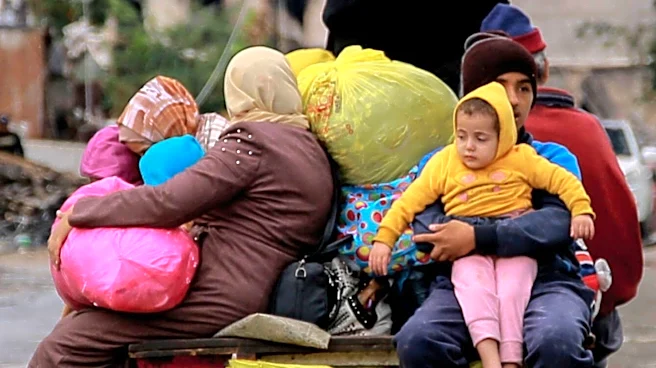
destruction and loss of life. Heavy rainfall has directly impacted 106,000 people, according to UNICEF, with thousands of tents housing displaced Palestinians now underwater and latrines overflowing. A particularly tragic incident occurred at the Ard al-Ribat displacement camp in Deir el-Balah, central Gaza, where a sandbank collapsed due to heavy rain, killing three children and a woman. Residents were forced to dig through sand with their bare hands to rescue those trapped, using mobile phone flashlights in the dark. The floods have damaged or destroyed shelters, latrines, and personal belongings, further displacing Palestinians who were already living in dire conditions. The United Nations Office for the Coordination of Humanitarian Affairs (OCHA) reported that over 26,000 households had sustained damage to their shelters or belongings by November 8. An estimated 1.4 million people, or 65% of Gaza's population, were living in tents or makeshift shelters when the storms hit.
Why It's Important?
The catastrophic flooding in Gaza highlights the extreme vulnerability of its population, particularly those displaced and living in makeshift shelters. This event underscores the severe humanitarian crisis exacerbated by years of conflict and inadequate infrastructure. The destruction of drainage networks, poor road conditions, and the lack of municipal equipment to manage rainwater have compounded the disaster, making it difficult to respond effectively to emergencies. The Gaza Government Media Office has labeled the sandbank collapse in Deir el-Balah a humanitarian disaster, holding Israel, the United States administration, and the international community responsible. They argue that the blocking of essential supplies like proper shelters, construction materials, mobile homes, fuel, and spare parts contributed to the deadly floods. This situation puts immense pressure on international aid organizations and political bodies to facilitate the entry of necessary materials for shelter and infrastructure repair, as the current conditions leave hundreds of thousands exposed to extreme weather with little protection.
What's Next?
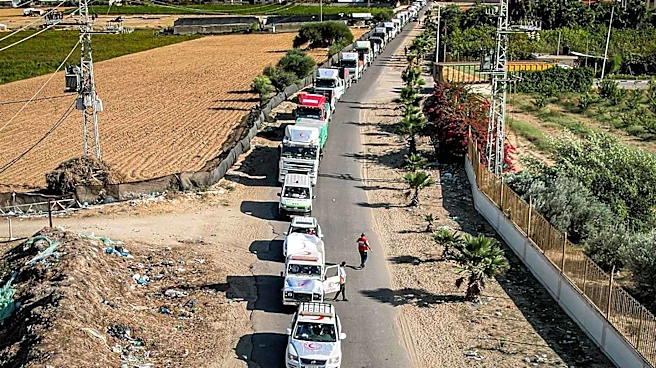
As Gaza enters its fourth winter since the conflict began in October 2023, the immediate next steps involve urgent humanitarian aid to address the needs of those affected by the floods. Aid organizations are expected to intensify calls for the entry of shelter materials and equipment to repair damaged tents and critical infrastructure. The Board of Peace has already urged Israel to allow essential supplies, including temporary shelters and drainage equipment, into the enclave. However, the effectiveness of these calls remains to be seen, given ongoing political complexities and restrictions. The international community will likely face increased pressure to intervene and ensure the delivery of aid and reconstruction materials. Without significant action, the prospect of impending winter storms poses a continued threat to the lives and well-being of Gaza's population, particularly those in displacement camps. The long-term challenge involves rebuilding Gaza's infrastructure to withstand future environmental challenges and provide safe living conditions for its residents.
Beyond the Headlines
The flooding in Gaza exposes deeper ethical and humanitarian dilemmas surrounding the ongoing conflict and blockade. The inability to adequately prepare for foreseeable natural disasters due to restrictions on essential supplies raises questions about collective responsibility and the protection of civilian populations in conflict zones. The destruction of infrastructure, including drainage systems, due to military actions, creates a cascading effect where environmental hazards become deadly. This situation also highlights the limitations and criticisms faced by bodies like the Board of Peace and the National Committee for the Administration of Gaza, which have been accused of ineffectiveness or complicity in maintaining the siege. The long-term implications include a potential increase in public health crises due to contaminated water and unsanitary conditions in flooded camps, further straining an already overwhelmed healthcare system. The psychological toll on a population repeatedly subjected to displacement, conflict, and now natural disaster is also a significant, often overlooked, consequence.