


What's Happening?
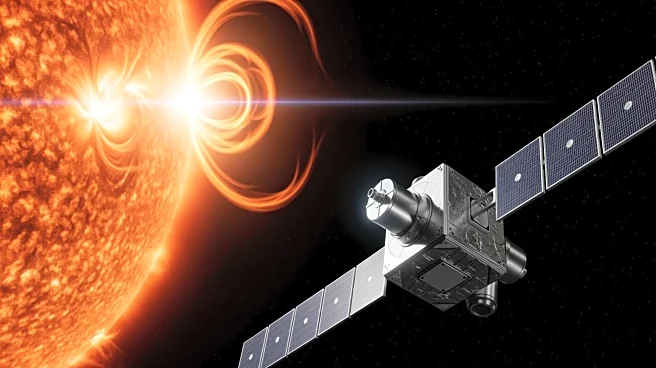
A recent study highlights the vulnerability of modern satellite networks to catastrophic collisions during major solar storms. Conducted by Sarah Thiele and her team, the research suggests that satellite mega constellations, such as those in Low-Earth
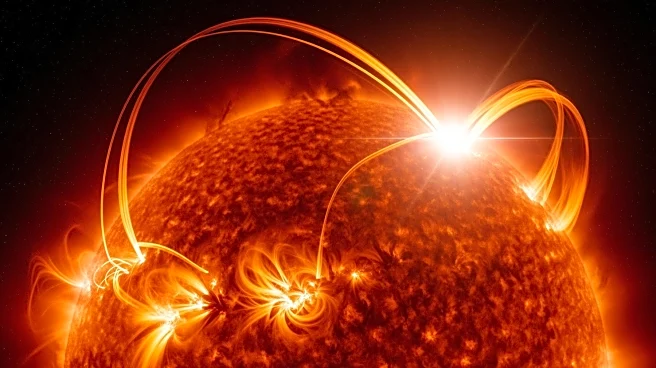
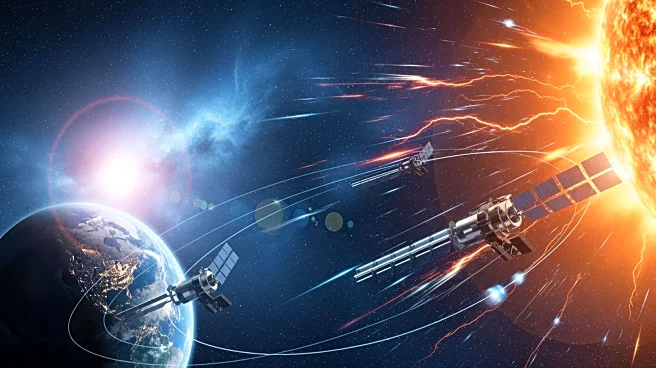
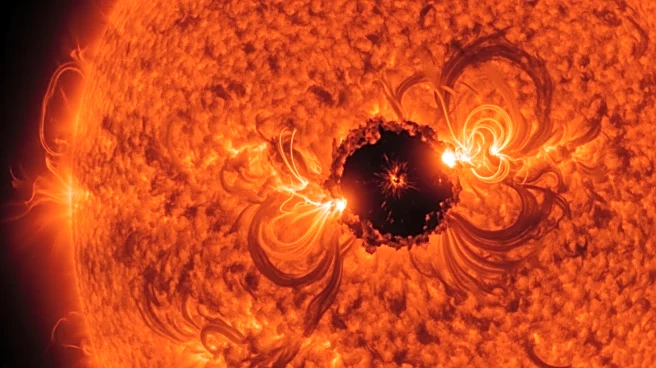
Orbit (LEO), could face significant risks if control is lost. The study, published as a preprint on arXiv, indicates that close approaches between satellites occur frequently, with Starlink satellites experiencing such events every 11 minutes. Solar storms exacerbate these risks by increasing atmospheric drag and potentially disabling satellite navigation systems. The study introduces the Collision Realization and Significant Harm (CRASH) Clock, estimating that a loss of control could lead to a collision within 2.8 days, a stark contrast to the 121 days estimated in 2018.
Why It's Important?
The findings underscore the critical need for robust satellite management systems to mitigate the risks posed by solar storms. The potential for catastrophic collisions could have far-reaching implications for global communications, navigation, and space exploration. The study highlights the delicate balance between leveraging the capabilities of satellite mega constellations and managing the inherent risks. A major collision could trigger the Kessler syndrome, where space debris makes future launches hazardous, impacting industries reliant on satellite technology. This scenario emphasizes the importance of developing strategies to enhance satellite resilience against solar storms.
What's Next?
The study calls for improved real-time feedback and control mechanisms to manage satellite operations during solar storms. As solar activity is unpredictable, satellite operators must prepare for potential disruptions. The research suggests that without effective control systems, the risk of collisions could increase, necessitating international cooperation to develop comprehensive strategies for satellite safety. Policymakers and industry leaders may need to consider regulatory frameworks to address these challenges and ensure the sustainability of space activities.
Beyond the Headlines
The study raises ethical and legal questions about the responsibility of satellite operators in preventing space debris and ensuring safe operations. The potential for a single event to disrupt satellite infrastructure highlights the need for global collaboration in space governance. As the reliance on satellite technology grows, addressing these challenges becomes crucial to maintaining the benefits of space exploration and communication.