






What's Happening?
Oil prices fell sharply on Monday as hopes for a peace deal between the U.S. and Iran grew. Brent crude futures dropped more than 5% to $83.52 a barrel after President Trump announced that talks with Iran would take place. This development follows Trump's
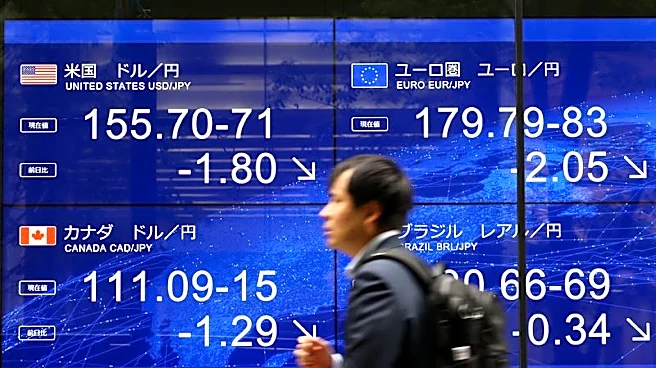
decision to call off an attack on Iran to pursue a diplomatic resolution. The potential reopening of the Strait of Hormuz, a critical route for global energy supplies, is a key focus of these negotiations. Meanwhile, the Japanese yen strengthened after the U.S. and Japan confirmed joint intervention to support the currency.
Why It's Important?
The potential for a U.S.-Iran peace deal could significantly impact global oil markets and geopolitical stability. A resolution could lead to a decrease in oil prices, benefiting consumers and industries reliant on energy. However, it also poses challenges for oil-producing countries that may face reduced revenues. The joint intervention by the U.S. and Japan to support the yen highlights the importance of currency stability in global markets. This move could influence international trade and economic relations, particularly between the U.S. and Japan.
What's Next?
Investors and market analysts will be watching for further developments in the U.S.-Iran negotiations and any official announcements regarding the peace talks. The outcome of these discussions could have far-reaching implications for global energy markets and geopolitical dynamics. Additionally, the potential for further currency interventions by the U.S. and Japan will be closely monitored, as it could impact global financial markets and trade relations.