


What's Happening?
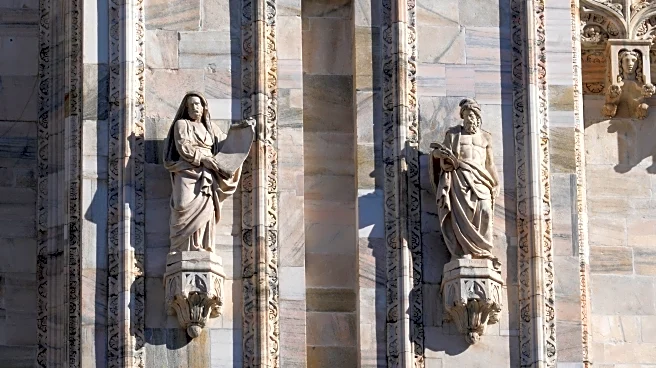
Milan's iconic Duomo cathedral has launched an 'Adopt a Statue' program aimed at restoring its centuries-old sculptures. This initiative, started in 2020, allows donors, including companies and individuals, to fund the restoration of statues that are
then occasionally displayed outside the Duomo. The program has successfully restored several statues, including the 15th-century 'Bearded Saint with Book,' now displayed at the headquarters of FNM, a Lombardy-based transport company. The restoration process involves selecting statues that are not severely damaged and can be safely loaned. The marble used for these statues comes from the Candoglia quarries in Italy's Piedmont region, a tradition dating back to the late 14th century.
Why It's Important?
The 'Adopt a Statue' program is significant as it not only preserves the cultural heritage of Milan but also makes art accessible to a broader audience by displaying restored statues in public spaces. This initiative highlights the importance of cultural conservation and the role of public-private partnerships in maintaining historical monuments. By involving donors in the restoration process, the program fosters a sense of community ownership and appreciation for cultural heritage. It also underscores the economic and cultural value of preserving historical sites, which can enhance tourism and local pride.
What's Next?
The program plans to continue restoring more statues, with around 30 sculptures preselected for potential restoration. Each restoration requires authorization from Italy's cultural heritage authorities, ensuring that the process adheres to conservation, insurance, and transport regulations. As more statues are restored and displayed, the program may inspire similar initiatives in other cities, promoting cultural preservation on a broader scale. The ongoing success of the program could lead to increased interest and investment in cultural heritage projects.
Beyond the Headlines
The 'Adopt a Statue' program reflects a broader trend of using art and culture as tools for urban renewal and community engagement. By restoring and displaying historical sculptures, the program not only preserves the past but also enriches the present cultural landscape. This initiative may encourage other cities to explore innovative ways to integrate art into public spaces, fostering a deeper connection between residents and their cultural heritage. Additionally, the program highlights the potential for art to serve as a bridge between history and modernity, offering new perspectives on traditional cultural narratives.