






What's Happening?
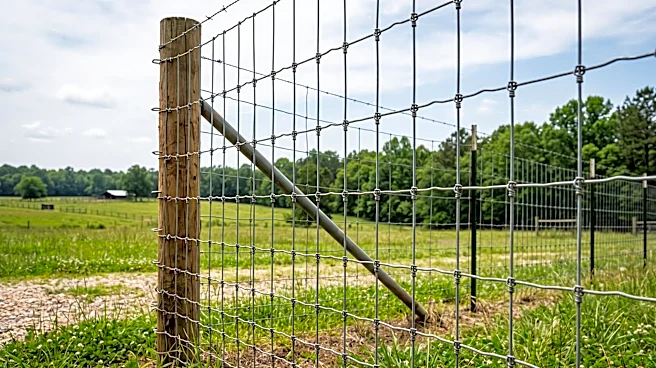
An inspection report from the Mississippi Department of Wildlife, Fisheries and Parks (MDWFP) has revealed potential violations at several high-fence enclosure and deer breeding pens across the state. These facilities, some owned by prominent individuals
including billionaire brothers Tommy and Jim Duff and former state wildlife commissioner Billy Deviney, were found to have issues intended to protect Mississippi's free-ranging deer herd from chronic wasting disease (CWD). Violations documented across 12 inspected breeding pens included 13 deer dying without CWD samples submitted, at least 53 untagged or improperly tagged deer, and over 160 deer with incorrect, missing, or untraceable records. Other findings included unlisted breeding pens, incomplete commercial enclosure records, and deer harvested over bag limits without required tags. Only two of the inspected pens had no issues.
Why It's Important?
These findings are critically important due to the significant threat chronic wasting disease (CWD) poses to Mississippi's deer population and the state's economy. CWD is a fatal, highly contagious disease that can persist in the environment, and captive breeding facilities can create pathways for its introduction and concentration. The white-tailed deer hunting industry generates over $1 billion in economic activity for Mississippi annually, making the health of the deer herd vital. Violations at these facilities, especially those owned by influential figures, raise concerns about inconsistent enforcement of regulations and the potential for CWD to spread, jeopardizing both the ecological balance and economic contributions of deer hunting. The integrity of the state's wildlife management practices is also called into question, particularly regarding the transparency and equal application of laws.
What's Next?
Investigations into the reported violations are ongoing, and the MDWFP has stated that citations have been or will be issued, though specific details remain undisclosed due to the nature of open investigations. The department also indicated that deficiencies have been corrected, permits approved, and quarantines lifted in some cases. However, the lifting of quarantines while investigations are still open has drawn criticism for creating contradictions in department guidelines. Furthermore, representatives of breeders and high-fenced enclosure owners recently met with MDWFP officials to advance a legislative agenda that includes reducing CWD testing requirements, which could further complicate efforts to control the disease. The MDWFP is reviewing current rules and may propose amendments as early as January's commission meeting.
Beyond the Headlines
The situation extends beyond mere regulatory infractions, touching upon issues of influence, transparency, and environmental stewardship. The involvement of prominent individuals raises questions about whether wealth and political connections can lead to preferential treatment or less stringent enforcement of wildlife laws. The omission of a high-risk finding, such as unpermitted semen importation, from initial reports further fuels concerns about transparency and accountability within the MDWFP. This could have broader implications for public trust in state agencies responsible for natural resource management. The potential for unpermitted semen importation also raises federal Lacey Act questions if wildlife or parts are moved across state lines in violation of state law. Ultimately, the long-term health of Mississippi's deer population and the economic benefits derived from it depend on robust, consistently enforced regulations and transparent oversight, free from undue influence.