


What's Happening?
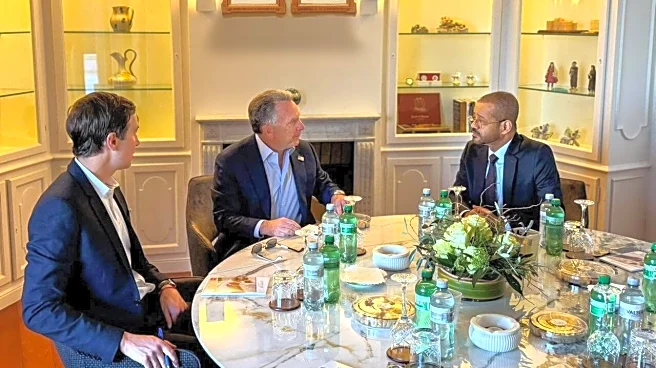
Recent nuclear talks between the U.S. and Iran in Geneva have shown progress, but significant gaps remain. The U.S. demands that Iran dismantle its main nuclear facilities and transfer its enriched uranium stockpile to the U.S. Iran has rejected these
demands, insisting on its right to enrich uranium. The talks occur against the backdrop of a major U.S. military buildup in the region, including the deployment of the USS Gerald R. Ford aircraft carrier near Israel. Despite the positive tone from both sides, the likelihood of a U.S. strike on Iran remains high, although the timeline may have been extended. Another round of talks is planned for next week in Vienna.
Why It's Important?
The ongoing negotiations are crucial for preventing a potential military conflict in the Middle East, which could have severe consequences for regional stability and global security. The U.S. aims to prevent Iran from developing nuclear weapons, while Iran seeks relief from international sanctions. The outcome of these talks could influence U.S. foreign policy and its relations with allies in the region. The military buildup underscores the high stakes involved and the potential for escalation if diplomatic efforts fail.
What's Next?
The next round of talks is scheduled for early next week in Vienna, focusing on technical discussions. The U.S. and Iran will continue to negotiate, with Oman mediating the discussions. The international community will be closely monitoring the situation, as any escalation could have far-reaching implications. The U.S. military presence in the region remains a significant factor, and the potential for conflict persists if a diplomatic solution is not reached.