
What's Happening?
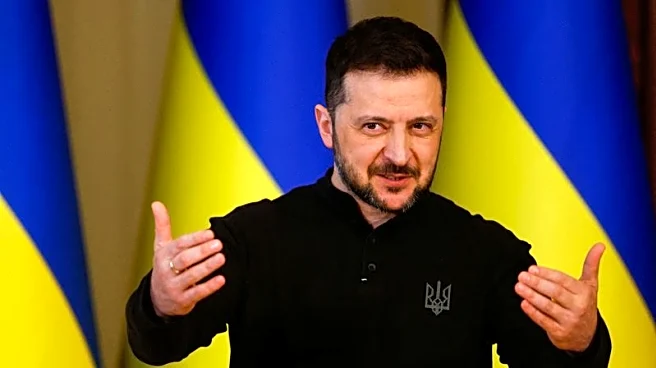
President Volodymyr Zelenskyy of Ukraine has replaced the head of the country's security service, Lt. Gen. Vasyl Maliuk, as part of a significant administrative reshuffle. This change comes ahead of Zelenskyy's
trip to Paris, where he aims to finalize agreements with international allies to prevent future Russian invasions if a peace agreement is reached. The Paris talks will involve leaders from approximately 30 countries, known as the 'Coalition of the Willing,' who are prepared to offer security guarantees to Ukraine. The discussions will address the potential deployment of troops near Ukraine and the scope of any force overseeing a ceasefire. Zelenskyy has appointed Ievhen Khmara, former head of the 'A' Special Operations Center of the Security Service, as the acting head of the agency. This reshuffle is part of Ukraine's broader strategy to maintain momentum in U.S.-led peace talks and strengthen its defense capabilities.
Why It's Important?
The reshuffle in Ukraine's security leadership underscores the country's strategic efforts to secure international support and ensure its defense against potential future aggression from Russia. The involvement of a coalition of countries willing to provide security guarantees highlights the international community's commitment to Ukraine's sovereignty and stability. This development is crucial for the U.S. and its allies, as it aligns with broader geopolitical interests in maintaining peace and stability in Eastern Europe. The outcome of the Paris talks could significantly influence the regional security landscape and the dynamics of international relations concerning Russia and Ukraine.
What's Next?
The Paris talks are expected to clarify the roles and commitments of the international coalition in supporting Ukraine's security. The discussions will likely address the contentious issue of deploying NATO troops in or near Ukraine, which Russia opposes. The success of these talks could lead to a formalized peace agreement, potentially altering the course of the ongoing conflict. However, unresolved issues, such as the status of disputed territories, remain critical hurdles. The international community will closely monitor the outcomes, as they could set precedents for future conflict resolution and international cooperation.