





What's Happening?
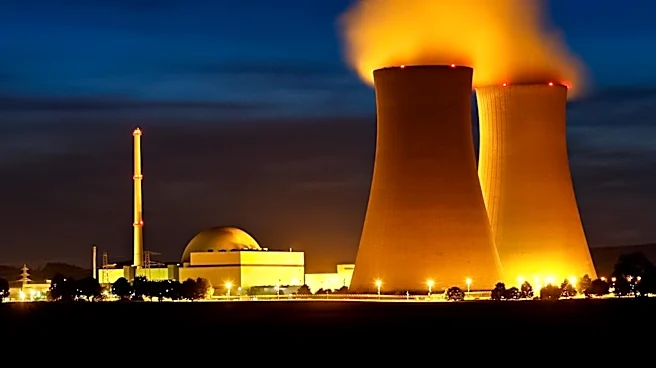
China is significantly expanding its uranium enrichment capabilities with three large centrifuge enrichment plants—Emeishan Project 4, Lanzhou Project 6, and Hanzhong Project 6—expected to commence initial operations by the end of 2026. Construction for
these facilities began in late 2024. This expansion is primarily driven by China's substantial civilian demand for nuclear fuel, as the country currently operates 60 nuclear reactors and has an additional 36 under construction. The International Atomic Energy Agency (IAEA) reported in January 2025 that Chinese-designed reactors constitute a significant portion of global reactor construction. While China has offered to place the Lanzhou and Hanzhong plants under IAEA safeguards, the Emeishan City plant is not included in this offer. As a nuclear-weapon state, China is not legally obligated to place its nuclear facilities under safeguards, though it has a voluntary-offer agreement from 1988 to make some civilian facilities eligible.
Why It's Important?
The expansion of China's uranium enrichment capacity has significant implications for both its civilian nuclear power sector and its nuclear weapons program. The increased enrichment capabilities will support China's growing energy demands, particularly with 36 new reactors under construction, and its ambition to expand peaceful nuclear energy cooperation with regions like the Gulf Cooperation Council and ASEAN. However, the potential for a surplus of enriched uranium, especially from the Emeishan plant, raises nonproliferation concerns. Experts like Hui Zhang of the Harvard Kennedy School's Belfer Center suggest that this surplus could be a source of highly enriched uranium (HEU) for weapons. The Federation of American Scientists estimated China's warhead stockpile grew from 290 in 2019 to about 620 in 2026, with projections exceeding 1,000 by 2030. This development could intensify global discussions on nuclear arms control and transparency, particularly given China's selective application of IAEA safeguards.
What's Next?
The three new centrifuge enrichment plants are slated to begin initial operations by the end of 2026. The scale of China's future demand for enriched uranium will depend on the pace of its reactor construction and the specific fuel requirements of different reactor designs. The potential for a significant oversupply of enriched uranium, particularly from the Emeishan plant, will likely draw continued scrutiny from international arms control organizations and other nations. Discussions regarding China's adherence to nonproliferation norms and its transparency in nuclear activities are expected to continue, especially concerning facilities not under IAEA safeguards. The development of these plants will also influence the global nuclear fuel market and potentially impact the strategies of other nuclear-capable nations.
Beyond the Headlines
The rapid expansion of China's uranium enrichment infrastructure underscores a broader global trend of increasing interest in nuclear energy for both civilian and potentially military applications. The dual-use nature of uranium enrichment technology presents a persistent challenge for nonproliferation efforts. While China asserts its civilian energy needs, the capacity to produce HEU beyond these needs could fuel an arms race or destabilize regional security. The lack of full IAEA safeguards on all new facilities, particularly Emeishan, highlights a loophole in international oversight for nuclear-weapon states. This situation could prompt calls for stronger international agreements and verification mechanisms to ensure that civilian nuclear programs do not inadvertently or intentionally contribute to weapons proliferation, thereby shaping the future of global nuclear governance.