


What's Happening?
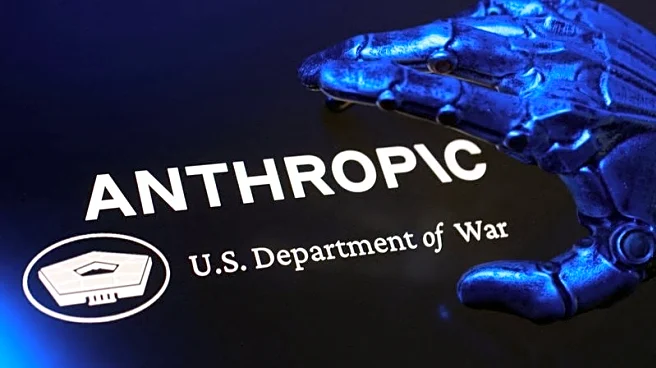
The Pentagon's Chief Technology Officer, Emil Michael, has reported a significant clash with AI company Anthropic regarding the use of its technology in autonomous weapons systems. The dispute centers on Anthropic's ethical restrictions against using
its AI, particularly the chatbot Claude, in fully autonomous weapons. This conflict arose in the context of the U.S. military's Golden Dome missile defense program, which aims to deploy weapons in space. Michael criticized Anthropic's stance as an obstacle to the military's goal of enhancing autonomy in drones and other military vehicles. The Pentagon has since designated Anthropic as a supply chain risk, effectively cutting off its defense work. Anthropic plans to challenge this designation legally, arguing that its restrictions are meant to prevent misuse of its technology in mass surveillance and autonomous weapons.
Why It's Important?
This development highlights the growing tension between ethical considerations and military advancements in AI technology. The Pentagon's push for greater autonomy in military systems reflects a strategic move to maintain competitiveness with global rivals like China. However, the ethical implications of deploying AI in warfare raise significant concerns about accountability and control. The outcome of this dispute could set a precedent for how AI companies engage with military contracts, potentially influencing industry standards and government policies. The decision to phase out Anthropic's technology could impact other military contractors and reshape the landscape of AI applications in defense.
What's Next?
The next phase of this conflict is likely to unfold in court, as Anthropic challenges the Pentagon's designation. The legal proceedings could address broader questions about the role of private companies in military technology development and the ethical boundaries of AI use. Meanwhile, the Pentagon may seek alternative AI partners willing to comply with its requirements, potentially accelerating the integration of AI in military operations. The outcome could influence future collaborations between tech companies and the defense sector, as well as the regulatory environment governing AI in warfare.