
What's Happening?
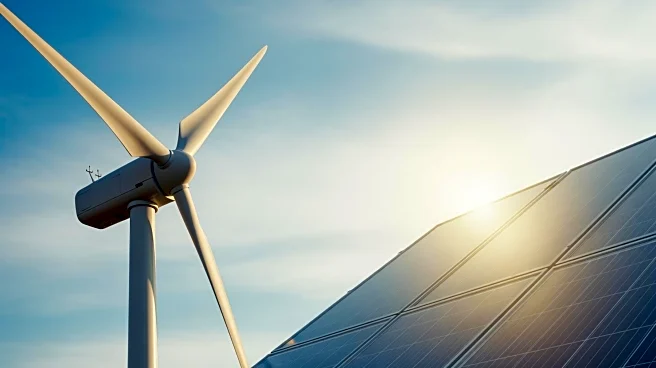
In 2025, the European Union achieved a significant milestone by generating more electricity from wind and solar than from fossil fuels. Renewables accounted for 30% of the EU's electricity, surpassing
fossil fuels at 29%. This shift is part of the EU's strategy to reduce dependence on costly imported fossil fuels and enhance energy security. The European Commission's Affordable Energy Action Plan aims to cut energy costs and promote homegrown renewables. The transition is supported by legislation to ban Russian gas imports by 2027 and increase reliance on U.S. LNG.
Why It's Important?
The EU's transition to renewable energy is crucial for reducing greenhouse gas emissions and enhancing energy security. By decreasing reliance on fossil fuels, the EU can mitigate risks associated with geopolitical instability and energy blackmail. The shift to renewables also supports the EU's climate goals and contributes to global efforts to combat climate change. The success of wind and solar in the EU serves as a model for other regions seeking to transition to cleaner energy sources.
Beyond the Headlines
The transition to renewables in the EU highlights the importance of grid enhancements and battery storage to accommodate fluctuating energy generation. The geopolitical implications of energy dependence are significant, as reliance on a single supplier can weaken bargaining power. The EU's focus on diversifying energy sources and investing in infrastructure is essential for maintaining stable and predictable energy prices.