




What's Happening?
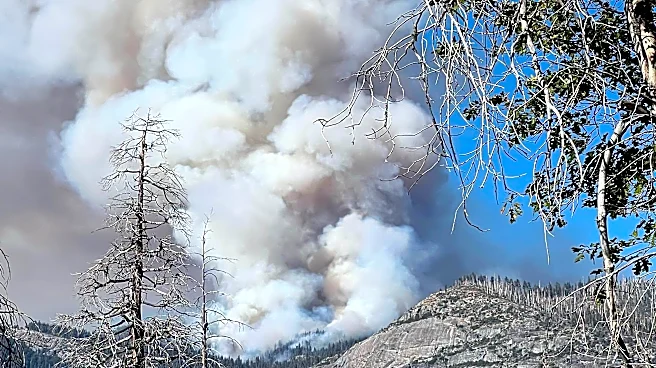
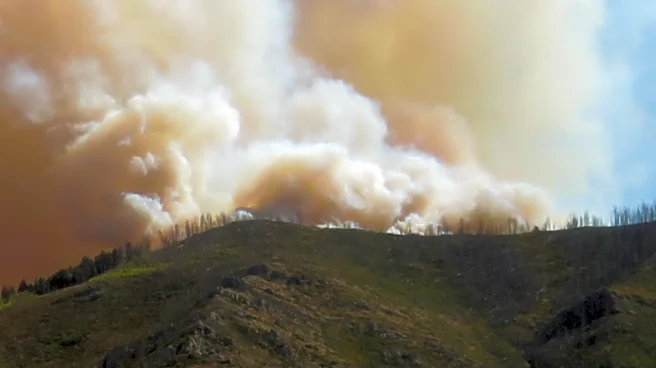
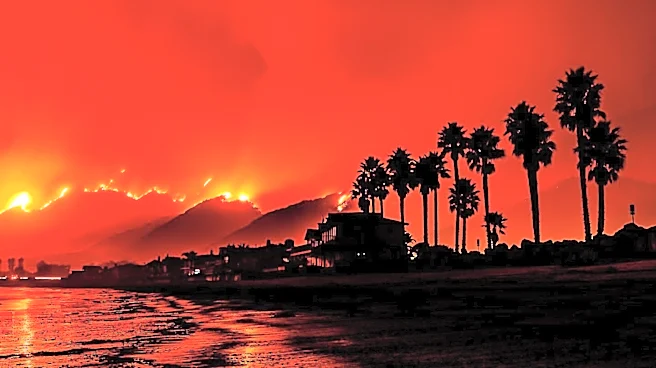
A 341-acre wildfire, named the Chileno fire, broke out in northern Marin County on Sunday, leading to air hazard warnings for Marin, Sonoma, Napa, and Solano counties. The fire started just before 5:40 p.m. near Chileno Valley Road and Bordessa Road,
west of Petaluma. Initial reports indicated five separate fires, which quickly merged into one large blaze. The Bay Area Air District issued an air quality advisory, warning residents that they might experience smoky, hazy skies and the smell of smoke. Officials stated that air quality could become unhealthy at times through Monday due to the harmful particulate matter and other pollutants present in wildfire smoke. By late Sunday, Cal Fire reported that the fire's forward progress had been halted by approximately 7 p.m., with 5% containment achieved.
Why It's Important?
This wildfire incident highlights the ongoing threat of wildfires in California and their significant impact on public health and environmental quality. The issuance of an air quality advisory underscores the immediate health risks posed by smoke inhalation, particularly for vulnerable populations. The rapid spread and merging of multiple initial fires demonstrate the volatile nature of these events and the challenges faced by firefighting agencies. The incident also brings attention to the broader issue of air pollution in urban and suburban areas adjacent to wildlands, emphasizing the need for effective fire management strategies and public awareness campaigns regarding air quality. The economic impact can include disruptions to daily life, potential property damage, and increased healthcare costs due to respiratory issues.
What's Next?
Firefighting efforts will continue to focus on increasing containment of the Chileno fire. Cal Fire will work to fully extinguish the blaze and monitor for any flare-ups. Residents in affected counties should continue to monitor air quality reports and follow any advisories issued by the Bay Area Air District, which may extend or modify warnings based on changing conditions. Public health officials will likely advise residents to stay indoors, keep windows closed, and use air purifiers if smoke levels remain high. Investigations into the cause of the fire will also be conducted. This event may also prompt discussions among local authorities about preventative measures and emergency response protocols for future wildfire seasons, especially given the increasing frequency and intensity of such events in California.
Beyond the Headlines
The Marin County wildfire is part of a larger pattern of increasing wildfire activity across the Western United States, often linked to climate change, prolonged droughts, and forest management practices. This incident underscores the interconnectedness of environmental factors, public health, and emergency services. The repeated occurrence of such events raises questions about long-term strategies for living with fire, including urban planning in wildland-urban interface areas, investment in fire-resistant infrastructure, and community-level preparedness. The psychological impact on residents, who frequently face the threat of evacuation and the health consequences of smoke, is also a significant, though often overlooked, aspect. This event serves as a reminder of the urgent need for comprehensive approaches to mitigate wildfire risks and adapt to a changing climate.